


Wild Atlantic Way
Tour Dates
10 July 2027 – 22 July 2027 – £2495 per person – Spaces available
This departure will be guided by Lucy Burnett
The above prices are based on a shared room. The single room supplement for this tour is £645; this option will be available during the booking process.
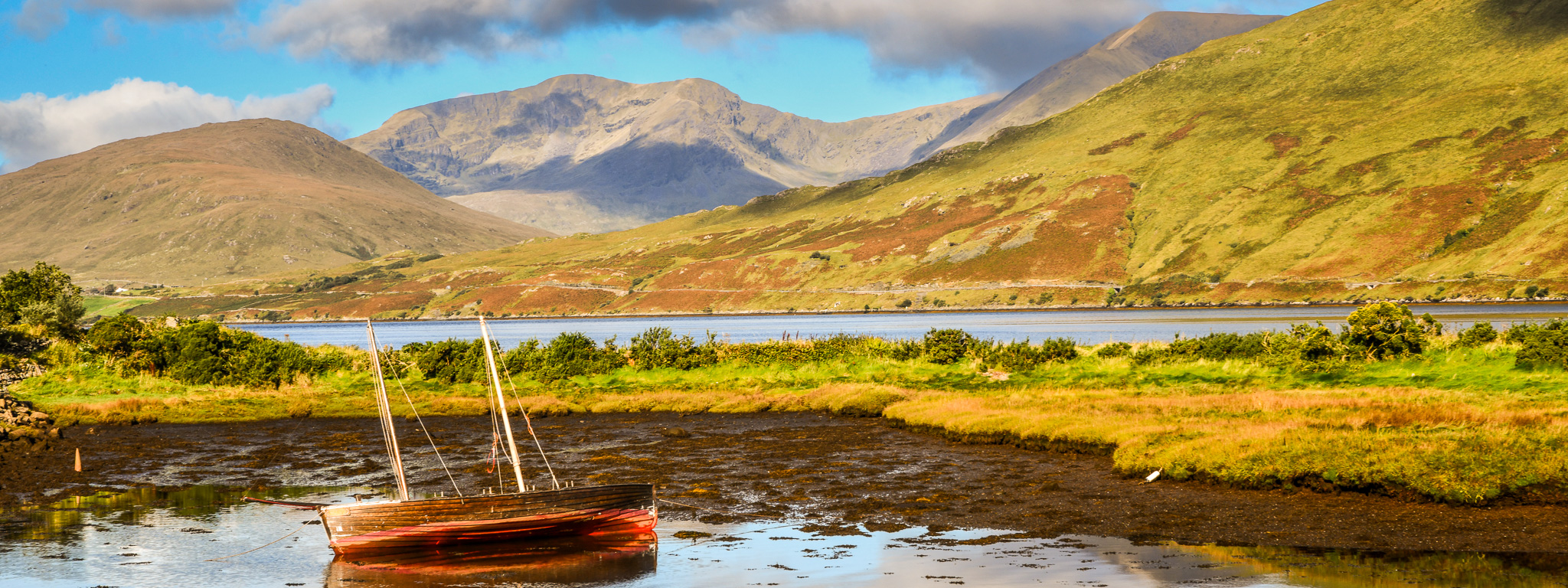
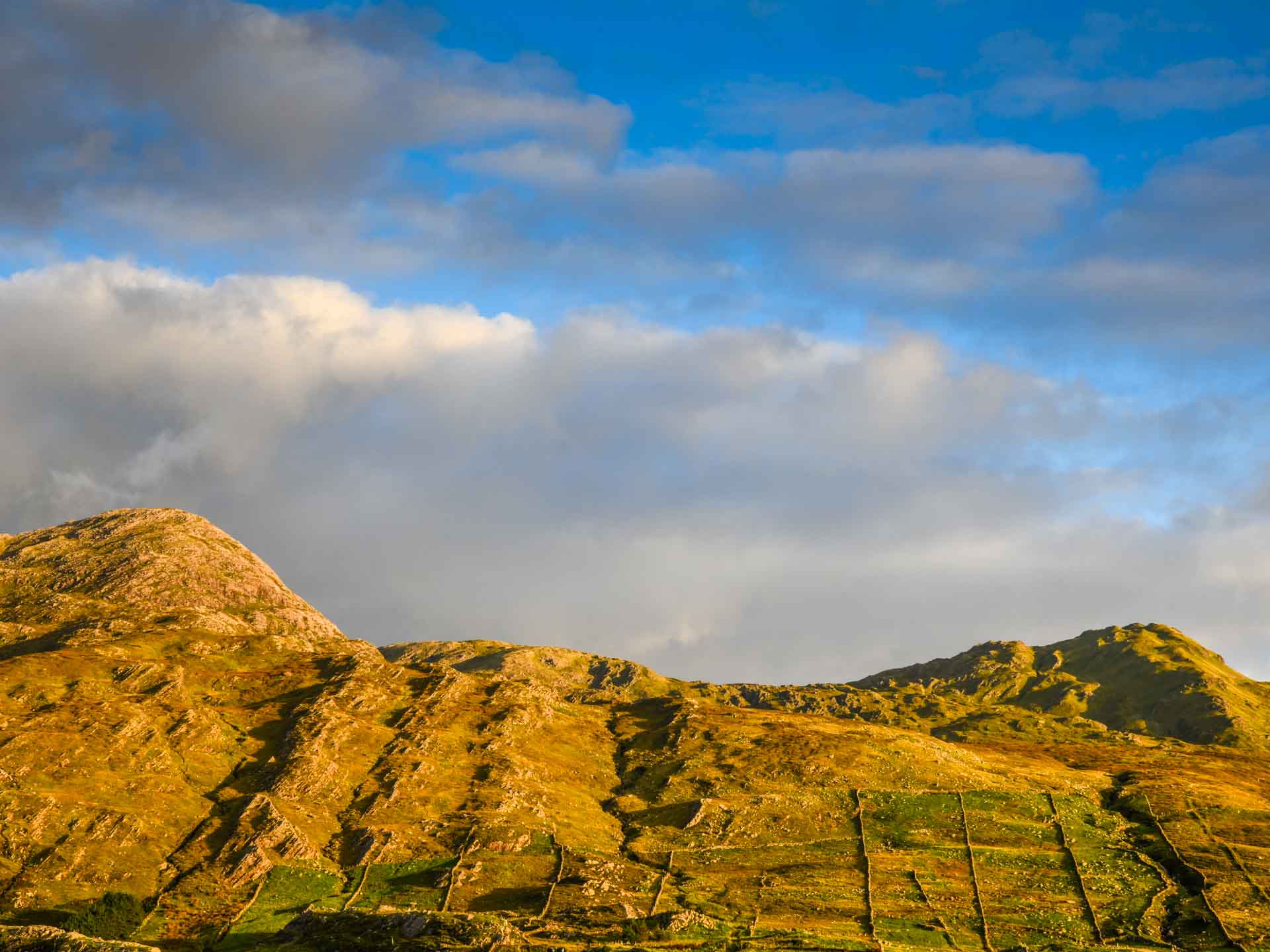
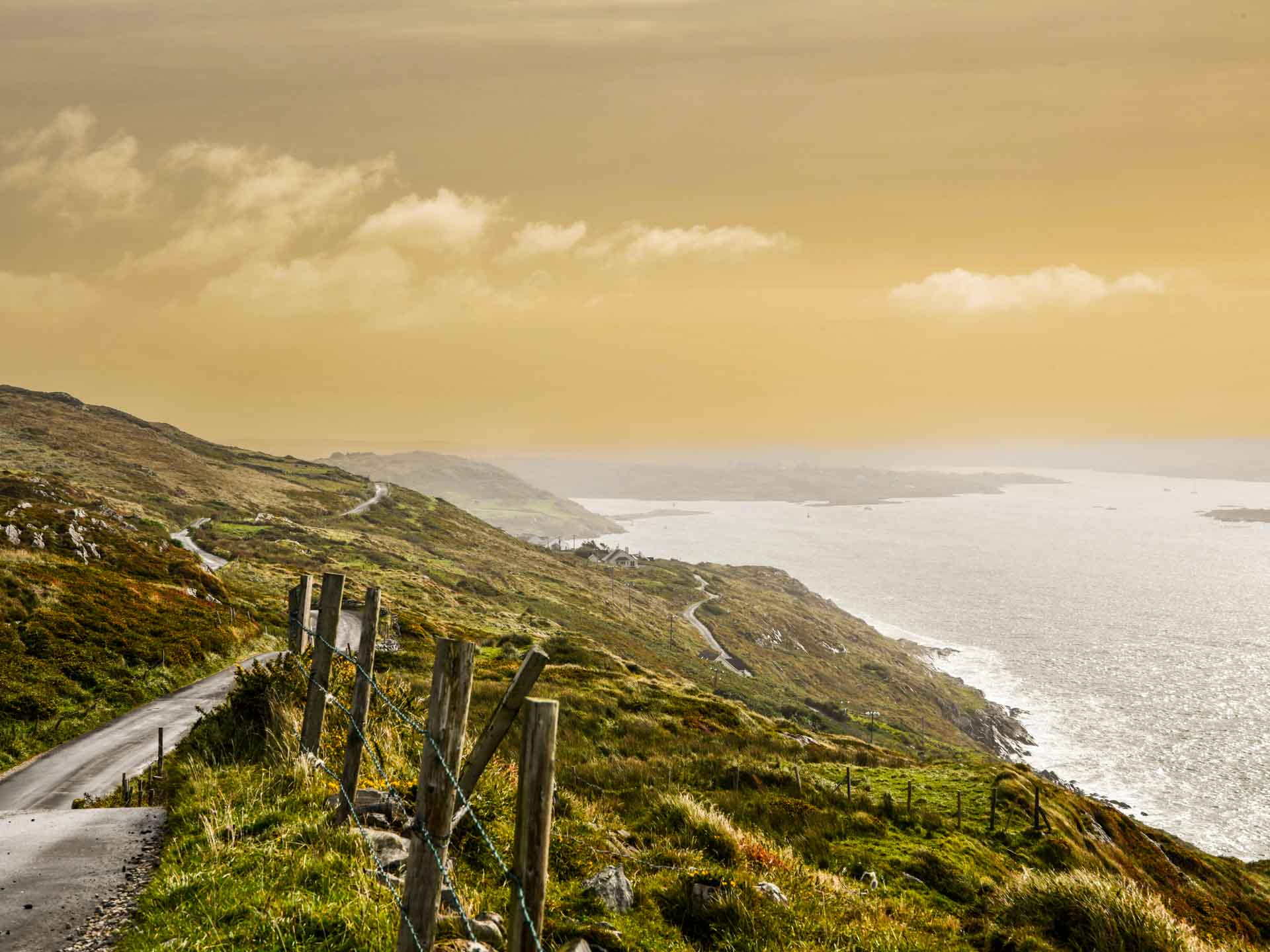
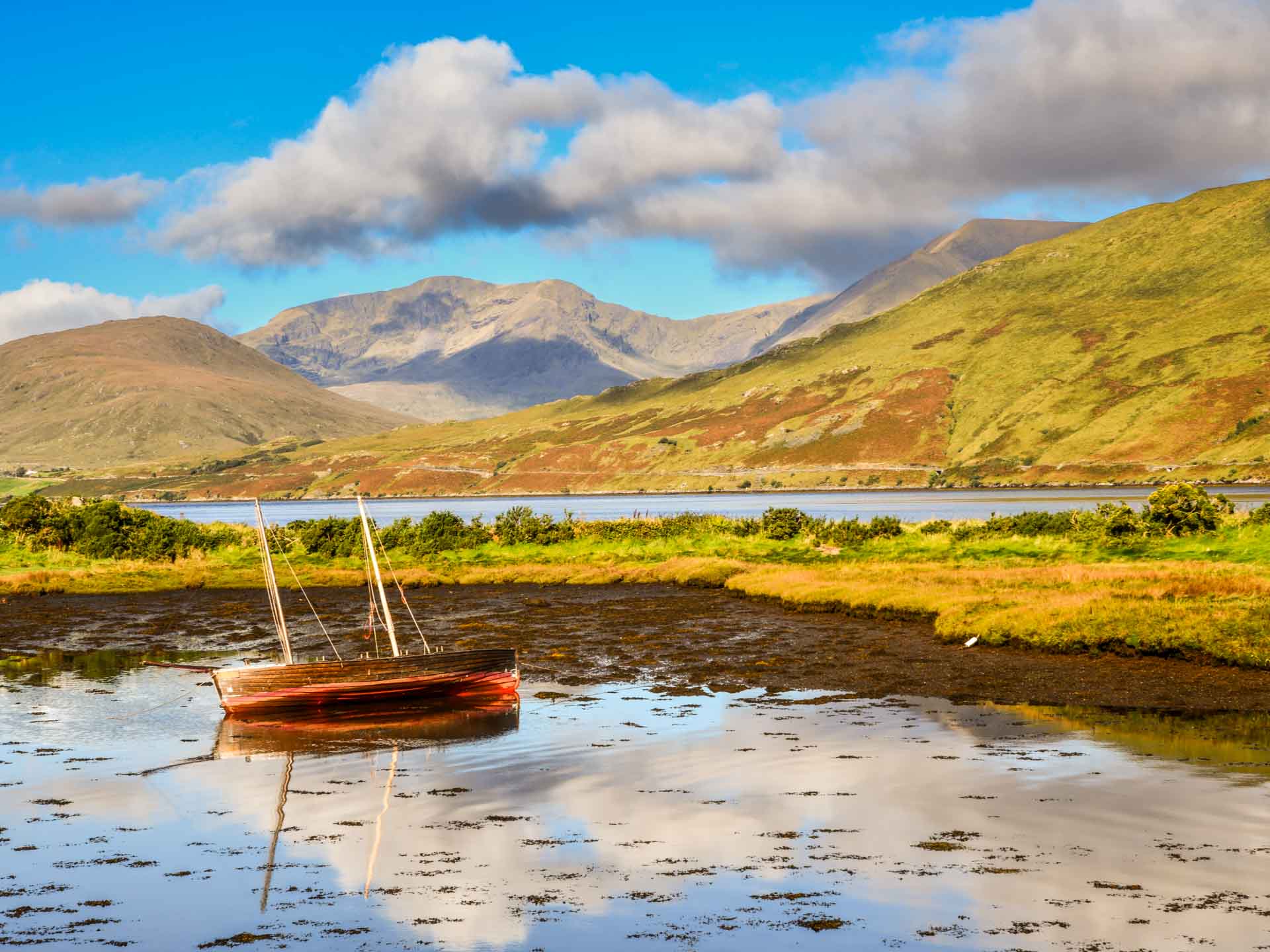
Ireland smashes out dramatic landscapes and cracking cycling! Mountain passes, wild Atlantic coastline, crescent white-sand beaches, colourful towns, lively pubs, and you’ve got one brilliant cycling trip, with yet another mind-bending highlight just around that next bend. This is the Wild Atlantic Way. This is the craic. From Mizen to Malin Head.
Cycling
1052km / 654 miles & 9,632m / 31,600 feet ascent
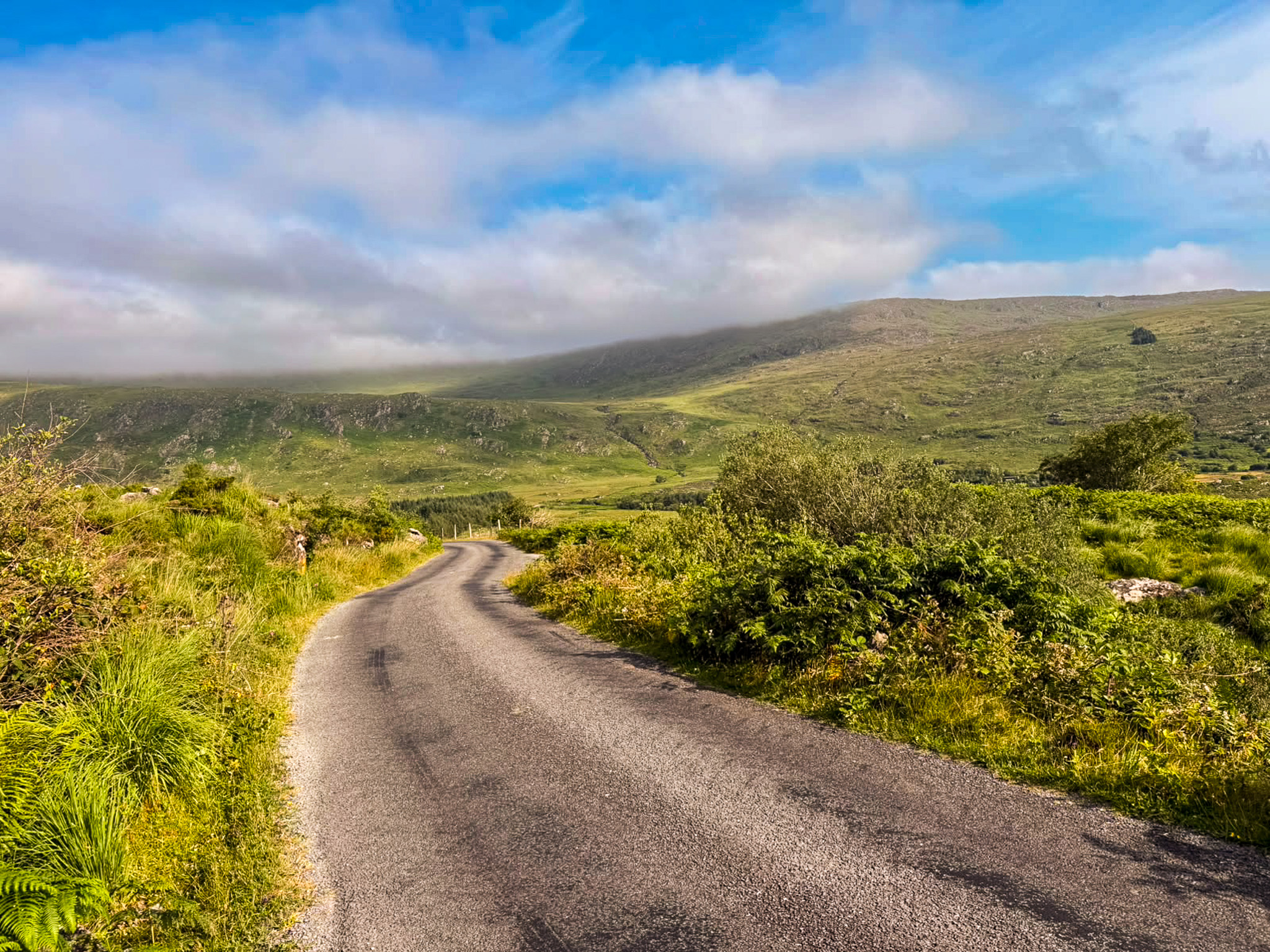
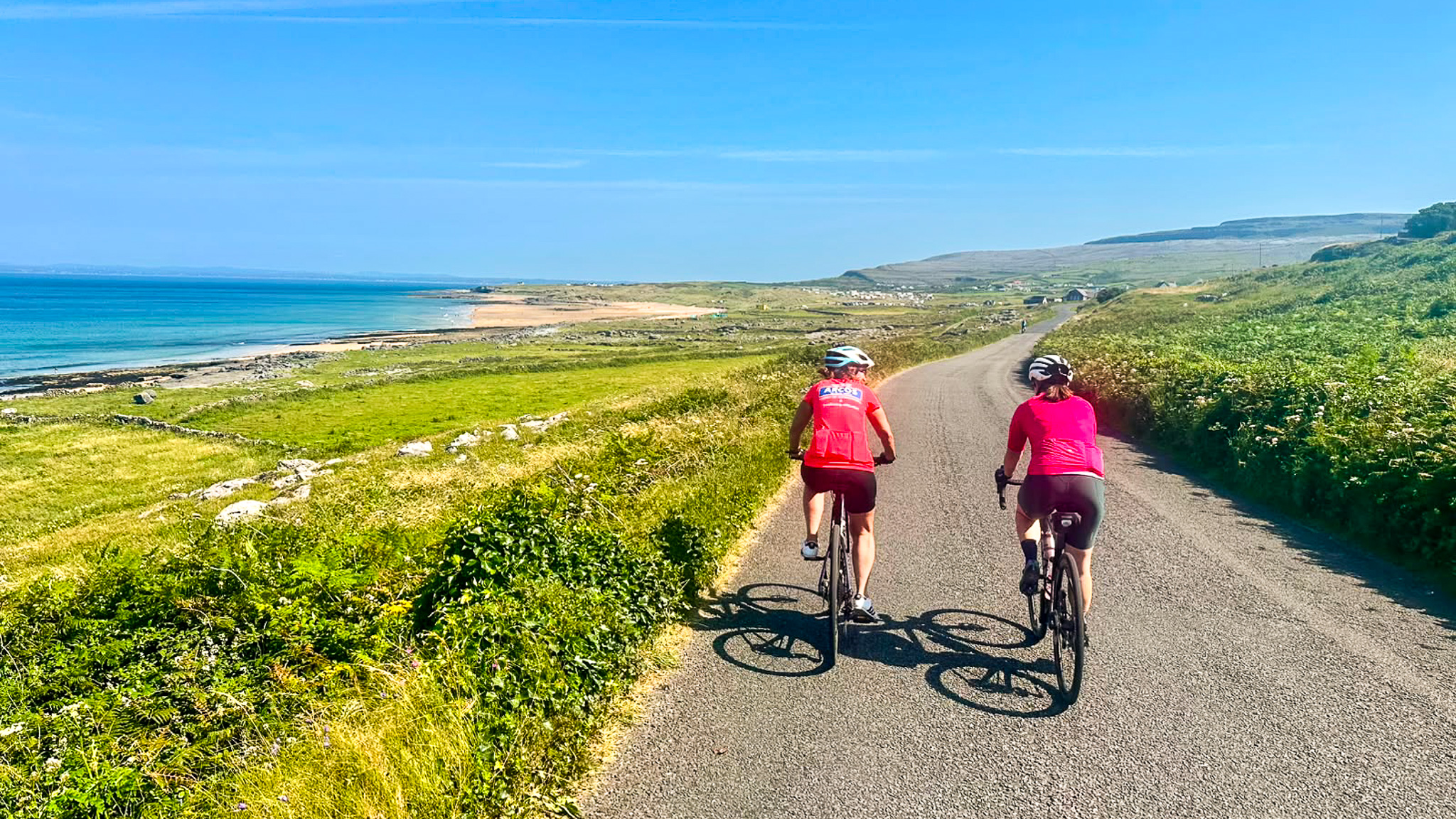
This is a journey from the gentler green landscapes of Cork to the wild, exposed coastline of Donegal, taking in some of Ireland’s finest cycling along the way. Expect mountain passes, quiet coastal roads, enormous beaches, limestone landscapes, bogs and plenty of Atlantic air. The route gets progressively wilder as we head north, with a different landscape – and usually another good excuse to stop for a photo – around every corner.
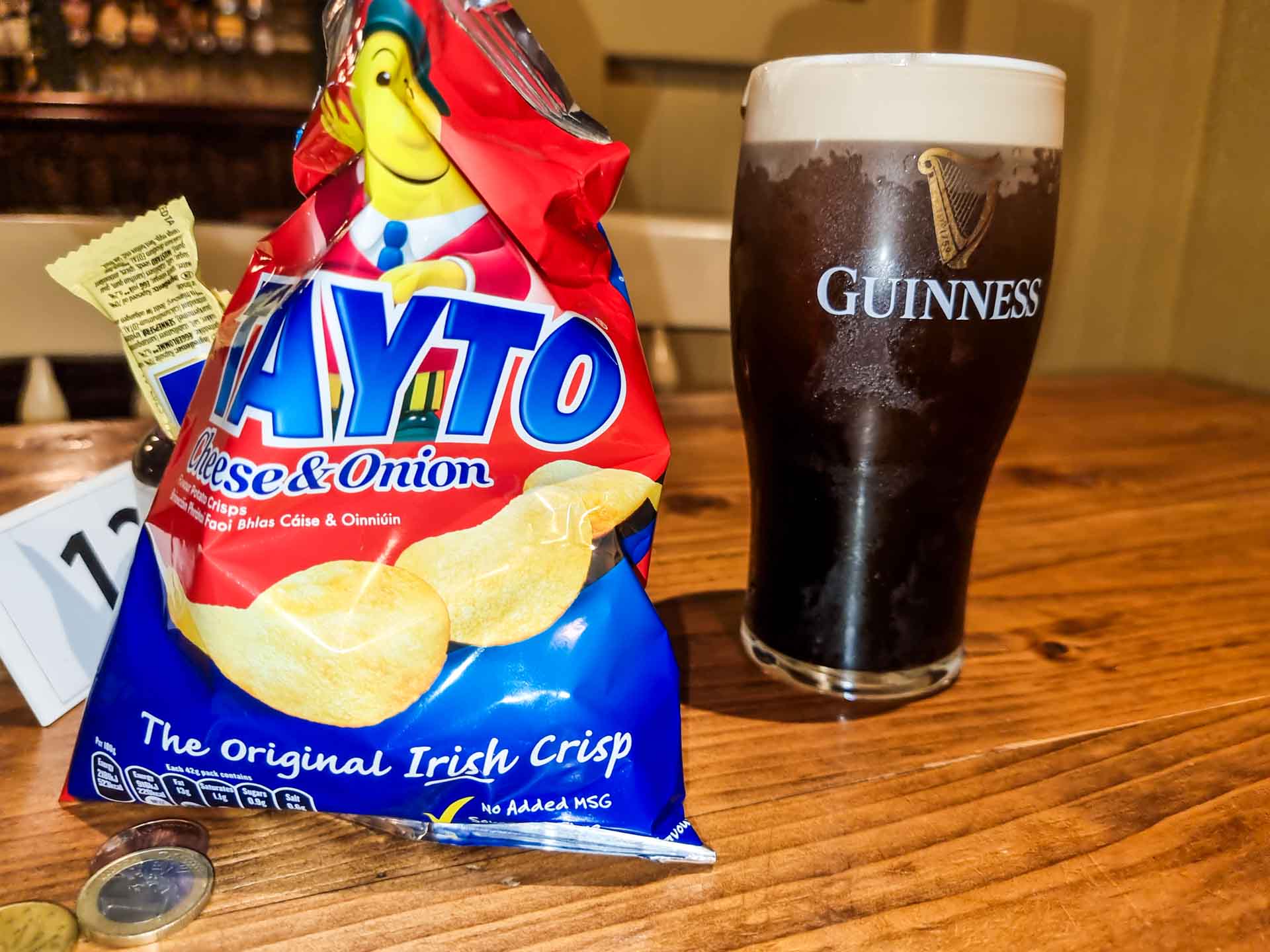
This isn’t our easiest Grade 3 tour. The distances are generally less, but there is far more climbing and descending than on other similarly graded holidays, so it’s worth getting some hills in beforehand. The riding involves a mixture of steady coastal roads, punchy climbs and some properly mountainous sections. But this is as much about the places we ride through as the miles themselves. We’ve chosen overnight stops where there’s something to enjoy after the bikes are parked: colourful towns, good food, traditional music, beaches, pubs and, of course, the occasional pint of Guinness. The weather may occasionally remind us that we’re on the Atlantic coast, but that’s all part of the adventure. And the light makes your photos pop, whatever the weather!
Highlights
• From Mizen to Malin Head: start at Ireland’s most south-westerly point and finish at its most northerly, with the Atlantic as your constant companion.
• Some seriously good climbs: Priest’s Leap, Moll’s Gap, Conor Pass and Sheeffry Pass are just a few of the mountain roads along the way.
• The Burren to Connemara: watch the landscape change from the limestone pavement of County Clare to the mountains, lakes and bogs of the west.
• Beaches, beaches and more beaches: from Inch and Lahinch to the white sands of the Inishowen coast, there are plenty of excuses for a mid-ride wander.
• The Irish craic: colourful towns, traditional music, good food and some very good pubs. Because a cycling holiday shouldn’t be all about watts and elevation profiles.
• The Wild Atlantic Way: huge skies, changing weather, crashing waves and some of the best coastal cycling in Ireland. And if the sun comes out, even better.
This is a perfect ride if you would like a challenge, but a manageable one, and ideal if you want to build up confidence before takiung on a Grade 4 (5,6) ride!
Tour Plan
Each day, you’ll be fully supported by our experienced guides and support crew, who will ensure that you have everything you need to enjoy the tour to the fullest. We’ll provide comfortable accommodation, good refreshments, and all the necessary equipment, so you can focus on enjoying the ride.
The Wild Atlantic Way route is flexible and should be seen as a guide only. Local conditions, weather or fitness could lead to changes in our daily plans. All times and distances are approximate.
Bike Transfers
We will happily transport your bike to Cork and back from Belfast at no extra charge. If you drop your bike off at our Sheffield office up to two days before departure we will carefully pack it in the support van, drive it to the start and then return it to Sheffield ready for you to collect.
If that isn’t convenient then depending where you live we may be able to collect your bike on our journey from Sheffield to Ireland. Please get in touch with us to discuss arrangements, any other arrangements will be for an agreed fee.
While we will take all reasonable care while handling your bikes, using padded covers and making sure they are securely stored, we are not liable for any loss or damage during transportation and storage. We recommend you have appropriate insurance.
Taking your bikes to the continent, As we are no longer part of the EU customs unions, any bike we transport to Europe requires an ATA Carnet which incurs a fee of £60 per bike. This cost will be added to your invoice.

-
Destination
-
Starts inMizen Head (via Cork transfer)
-
Ends inMalin Head (and transfer to Belfast)
-
Road surfacesTarmac (conditions can vary).
-
Bike TypeRoad bike
-
IncludedWild Atlantic WayAccommodationLunchCycling guideGPX filesVehicle supportBaggage transfer
-
Not IncludedDomestic flightsEvening meals (unless specified)Bike hireTravel to start & from finishInternational flightsAirport transfersTravel insuranceCookie Policy (US)Cookie Policy (US)Visas
Arrival in Cork
Welcome to Ireland! Fáilte go hÉirinn!
Arrive in Cork and make your way to the hotel, where you’ll meet the guides and your fellow riders. That evening, we’ll have a welcome briefing and group dinner, with plenty of time to get to know everyone before the riding begins. There’ll also be a chance to fettle your bike ready for the early-morning transfer and your first day in the saddle.
If you arrive in time, Cork is a lively and very manageable city to explore. We can organise extra nights at the hotel if you’d like to spend a day or two here before the tour starts.
Sightseeing highlights:
- English Market & Cork city centre – Browse the stalls at Cork’s famous covered food market, dating back to 1788, then explore the compact city centre around the River Lee, with plenty of cafés, pubs and restaurants to choose from.
- St Fin Barre’s Cathedral & Elizabeth Fort – Two of Cork’s most impressive landmarks. Visit the spectacular Gothic cathedral before heading up to the 17th-century Elizabeth Fort for panoramic views across the city.
- Shandon & Cork City Gaol – Head up to Shandon and climb the tower of St Anne’s Church, where you can even ring the famous bells, or visit the former Cork City Gaol for a glimpse of life in a 19th-century prison.
- Blarney Castle – About 8 km from Cork, making it a good option for a half-day cycle if you fancy getting on the bike before the tour begins (we can help with route files if helpful, but this is not a guided ride). Explore the castle and gardens and, of course, decide whether you want to kiss the Blarney Stone and acquire the gift of the gab.
Mizen Head to Kenmare
Approx. 90 km / 56 miles & 998m / 3,275 feet ascent
 Our Wild Atlantic Way adventure starts with an early-morning transfer to Mizen Head, the far south-western tip of Ireland. From here, we saddle up and head north, following the EV1 EuroVelo route as far as Bantry, taking in some of the wildest scenery in County Cork. There’s an early challenge at Priest’s Leap, with a short, sharp climb of up to 13%, but the effort is rewarded with some of the most rugged scenery of the day. The narrow road winds into the hills, with far-reaching views across the wild landscape and very little sign of civilisation.
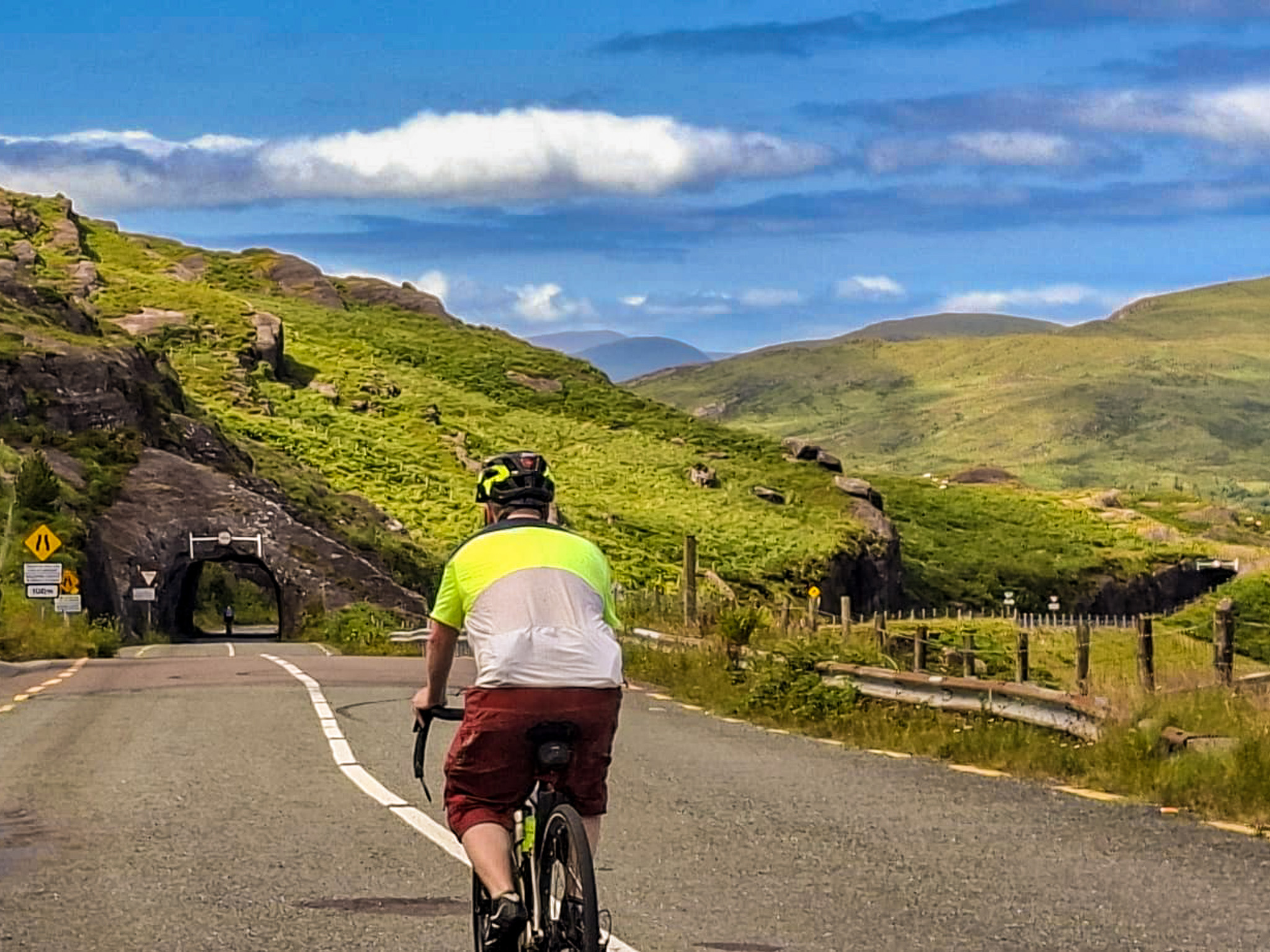
From here, we drop back towards the coast and continue through the hills to Dunmanus Castle and Bantry. We’ll stop for lunch overlooking Bantry Bay, close to the ferry to Whiddy Island, before continuing towards Glengarriff. After a coffee stop at Glengarriff Nature Reserve, we tackle the final climb over Caha Pass, which climbs to almost 1000 feet but in broad sweeping curves. At the summit, the road disappears into the mountain through the atmospheric Caha Pass tunnel, before a great descent takes us into Kenmare and the end of our first day in the saddle.
Highlights / sightseeing en route:
- Mizen Head – Ireland’s far south-western tip. Take the short walk down the famous 99 steps and across the iconic arched bridge to the Signal Station before setting off. Keep an eye out for whales, dolphins, seals and seabirds.
- Dunmanus Castle & Bantry – The atmospheric ruins of this 15th-century castle sit right on the edge of Dunmanus Bay. In Bantry we can explore the 18th-century Bantry House and Gardens if time allows.
- Glengarriff Nature Reserve – A good spot for a leg stretch, with beautiful woodland and views from Lady Bantry’s Lookout. You may even spot a freshwater pearl mussel in the river.
- Kenmare – a great little town with a well-deserved culinary reputation.
Kenmare to Dingle
Approx 97 km / 60 miles & 1,113m / 3,650 feet ascent
 We have changed the route from 2026 by adding an extra day to properly take in the Dingle Peninsula (no buses involved in 2027!!) and you will soon learn why. Because today is another spectacular day in the saddle, as we leave Kenmare and cross the Kerry mountains towards the Dingle Peninsula.
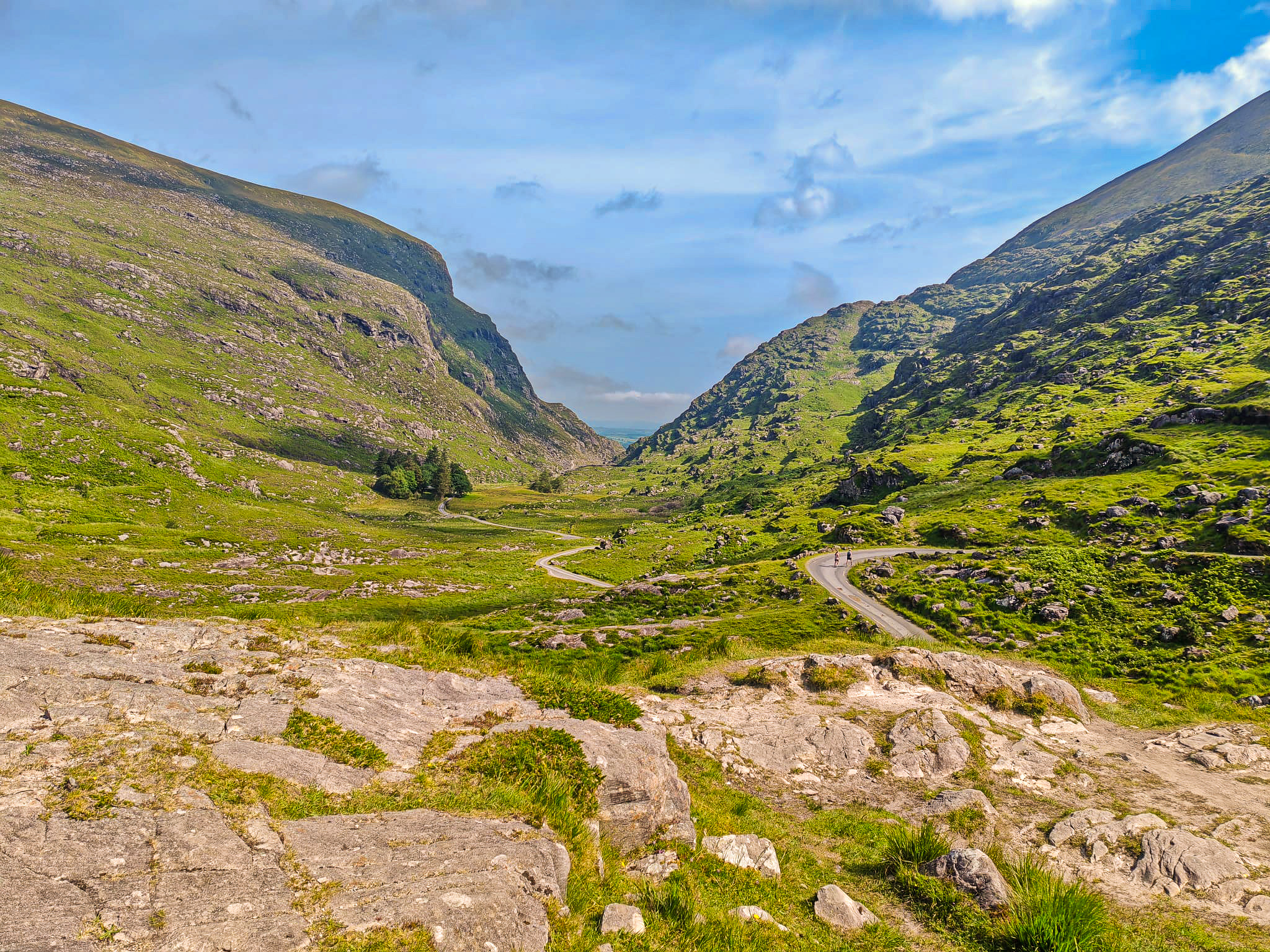
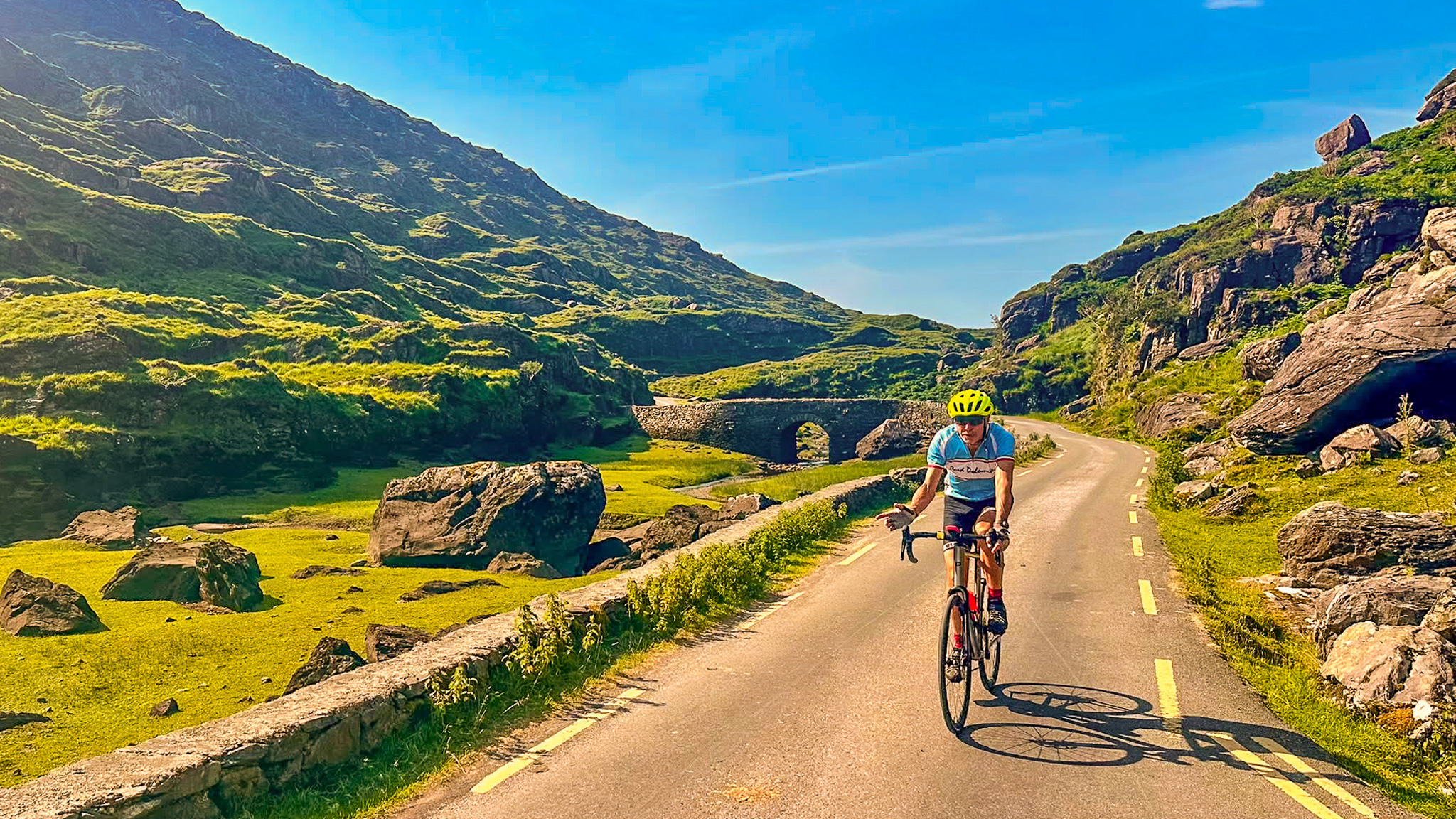
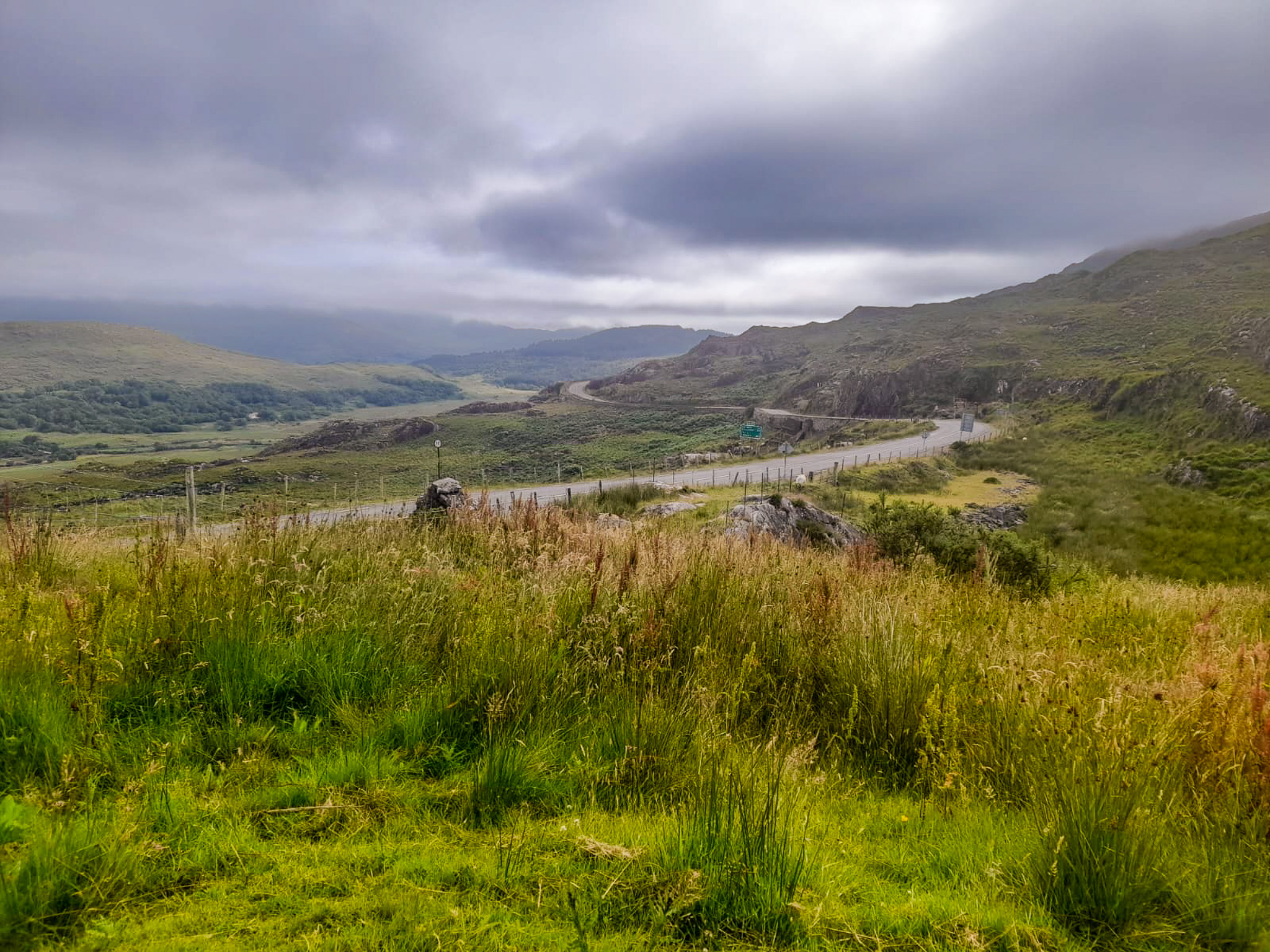
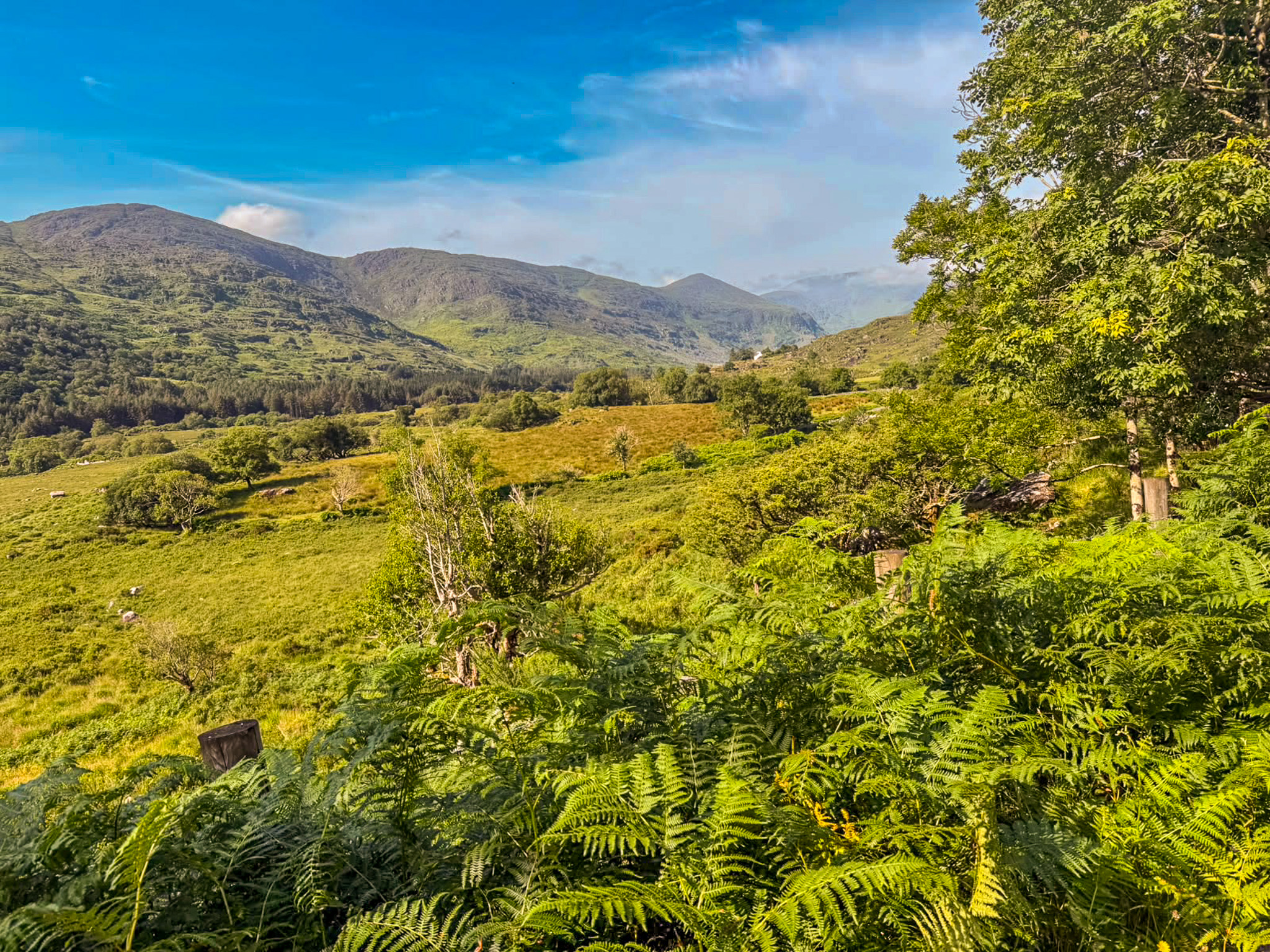
The first challenge is the climb to Moll’s Gap, following the N71 as it winds steadily upwards through increasingly wild mountain scenery. At the top, we’re rewarded with huge views across MacGillycuddy’s Reeks. From Moll’s Gap, we head towards the Gap of Dunloe and into the Black Valley. The road narrows as we pass between the mountains, with a series of lakes and stone bridges making this one of the most memorable sections of the route. There can be plenty of walkers, cyclists and jaunting cars here, so it’s a section to take at a relaxed pace and enjoy. We then head north and west towards Castlemaine, before joining the EV1 and following it west towards Dingle.
The road from Castlemaine to Inch is busier than much of the day, following the R561 with no dedicated cycling infrastructure, so care is needed on this section, but we leave this road as soon as we can. From our cafe stop at Inch Beach onwards, the route becomes quieter again as we follow the coast towards Annascaul and Dingle, with Minard Castle and Dingle Bay providing a spectacular finale to the day.
Highlights / sightseeing en route:
- Kate Kearney’s Cottage – A 150-year-old family-run pub, restaurant and craft shop at the entrance (or for us exit) to the Gap. It has been welcoming travellers for generations and is a great place to stop for an early lunch after our exertions!
- Gap of Dunloe – Look out for the Wishing Bridge, an old stone bridge where local tradition says wishes really do come true. The five lakes along the Gap were carved by glaciers, creating the distinctive landscape you see today.
- Inch Beach & Minard Castle – Inch is a huge sandy beach stretching into Dingle Bay, while the ruined Minard Castle sits dramatically on a grassy hill above the coast.
- Dingle – A colourful harbour town with a strong fishing heritage and a famously lively traditional music scene. The narrow streets are packed with character, independent shops, cafés and traditional pubs.
Dingle to Tralee
Approx 88 km / 54.5 miles & 1006m / 3300 feet ascent
 After an early breakfast, we’ll head out on the spectacular Slea Head loop before the traffic gets busy. The R559 takes us west from Dingle through Ventry and out towards the exposed Atlantic coast. The road becomes increasingly wild as we round the western tip of the peninsula, with the Blasket Islands offshore and the Atlantic on one side and the slopes of Mount Eagle on the other. The narrow road and spectacular views make this a section to take slowly and enjoy, with plenty of excuses to stop for photos. For those who want an easier day, this loop can be omitted.
Back in Dingle, we’ll pause for a coffee before heading east again and tackling Conor Pass. The road climbs steeply through a narrow mountain valley before reaching the 410m summit, where the views open out across the peninsula, Dingle Bay and the mountains. From the top, we descend towards the north coast before continuing along the EV1 to Tralee through Cloghane, past Castlegregory and the Maharees, a narrow sandy peninsula separating Tralee Bay from the Atlantic. There are long beaches and views towards Mount Brandon and Kerry Head.
Highlights / sightseeing en route:
- Fahan Beehive Huts – Look out for these distinctive dry-stone clocháns around Fahan, some of the best-known examples of the ancient stone huts found across the Dingle Peninsula. They sit just off the Slea Head road and make an interesting short stop.
- Dunquin Pier & the Blasket Centre – A short detour from the main road takes you to the famous zig-zag path down to Dunquin Pier, with views across to the Great Blasket. The nearby Blasket Centre tells the story of the island community that lived out here until 1953.
- Gallarus Oratory – This tiny, remarkably well-preserved early Christian stone church is thought to date from somewhere between the 6th and 9th centuries. It’s one of the peninsula’s most distinctive historic buildings and sits close to the Slea Head loop.
Tralee to Lahinch
Approx. 97km / 60.5 miles & 663m / 2,100 feet ascent (plus 2.5 miles in ferry)
 Today has a lovely relaxed vibe after the first few days’ knockout sights. Not a ‘down day’, but one of those days where you can decompress, ride, catch a ferry, eat, explore a little and simply enjoy being on the bike. There’s a stiff wakener of a climb out of Tralee, but after that the route settles into a gentler rhythm as we head north through the Kerry countryside to Listowel. We’ll stop for coffee here and give you time to explore this charming literary town, home to Writers’ Week and closely associated with writers including John B. Keane and Brendan Kennelly.
From Listowel, we continue to Tarbert and the Shannon Estuary, where we swap bikes for the ferry to Killimer in County Clare. The crossing takes around 20 minutes, giving the legs a breather and, if you’re lucky, the chance to spot some of the estuary’s resident bottlenose dolphins. Back on two wheels, we head north through County Clare towards Lahinch.
Our destination is one of Ireland’s best-known surfing towns, sitting on Liscannor Bay beneath the Cliffs of Moher. After a relatively gentle day in the saddle, it’s a great place to kick back, grab a drink and, weather permitting, watch the sun set over the Atlantic.
Highlights / sightseeing en route:
- Listowel – A small town with a surprisingly big literary heritage. Look out for the Writers’ Square and John B. Keane’s pub, or visit the Kerry Writers’ Museum if you fancy delving a little deeper.
- Tarbert–Killimer ferry – The 20-minute crossing of the Shannon Estuary is a welcome change of pace. Keep an eye on the water for bottlenose dolphins, which live in the estuary year-round.
- Lahinch – One of Ireland’s best-known surf spots, with a lively little town built around its long beach. It’s an ideal place to relax after the day’s riding. If the weather cooperates, head down to the beach in the evening and watch the sun disappear into the Atlantic.
Lahinch to Galway
Approx. 109km / 68 miles & 1021m / 3,350 feet ascent
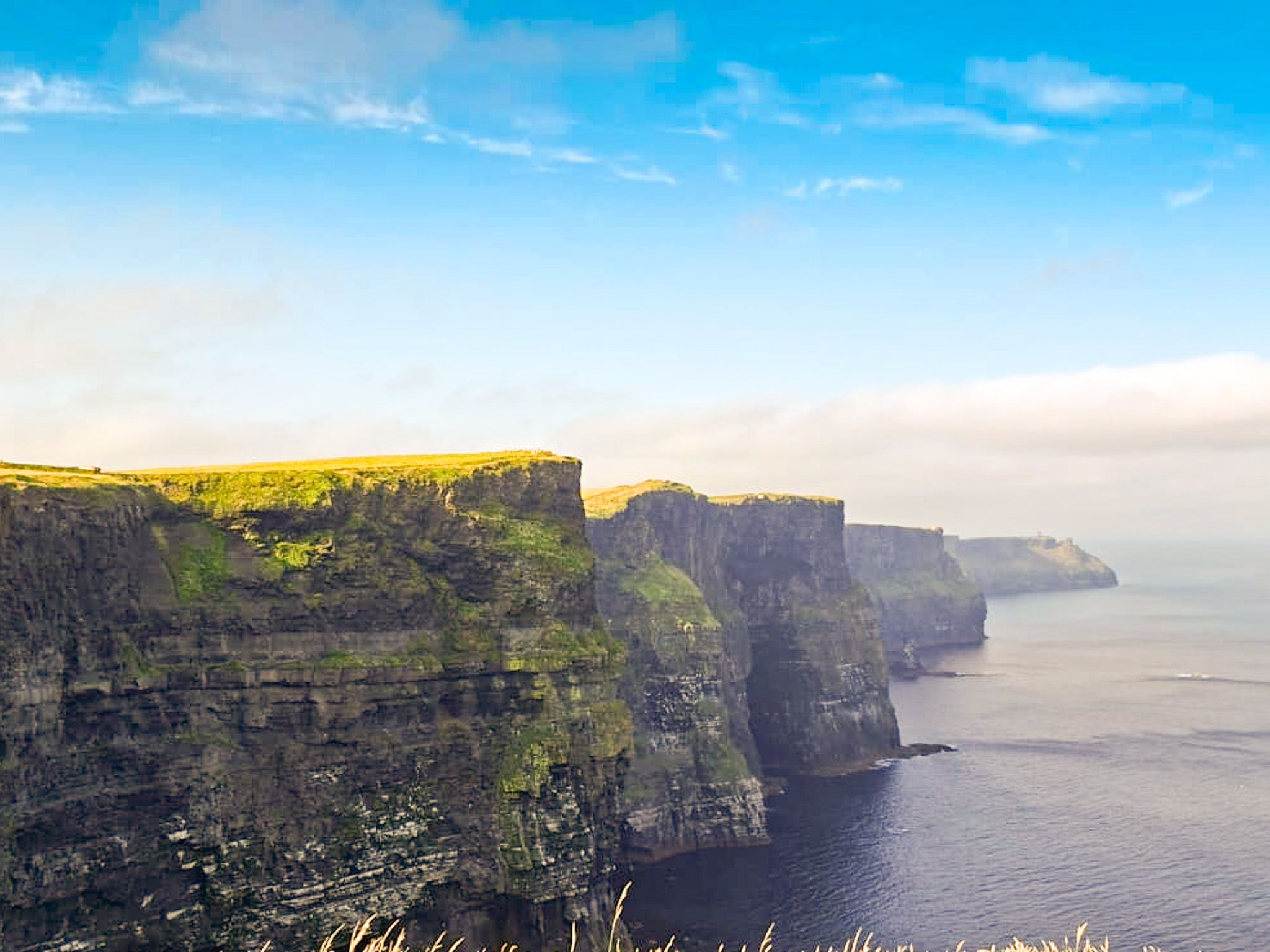
 A cycle route that brings together some of the most varied riding of the Wild Atlantic Way. We leave Lahinch and head north towards the coast, with the first big landmark of the day appearing as we approach the Cliffs of Moher. From here, we follow the Atlantic north through Doolin and along the exposed coast towards Black Head, keeping an eye out for the empty cottage reminders of the famine. The road is relatively open and rugged here, with the sea constantly competing for your attention with the landscape inland.
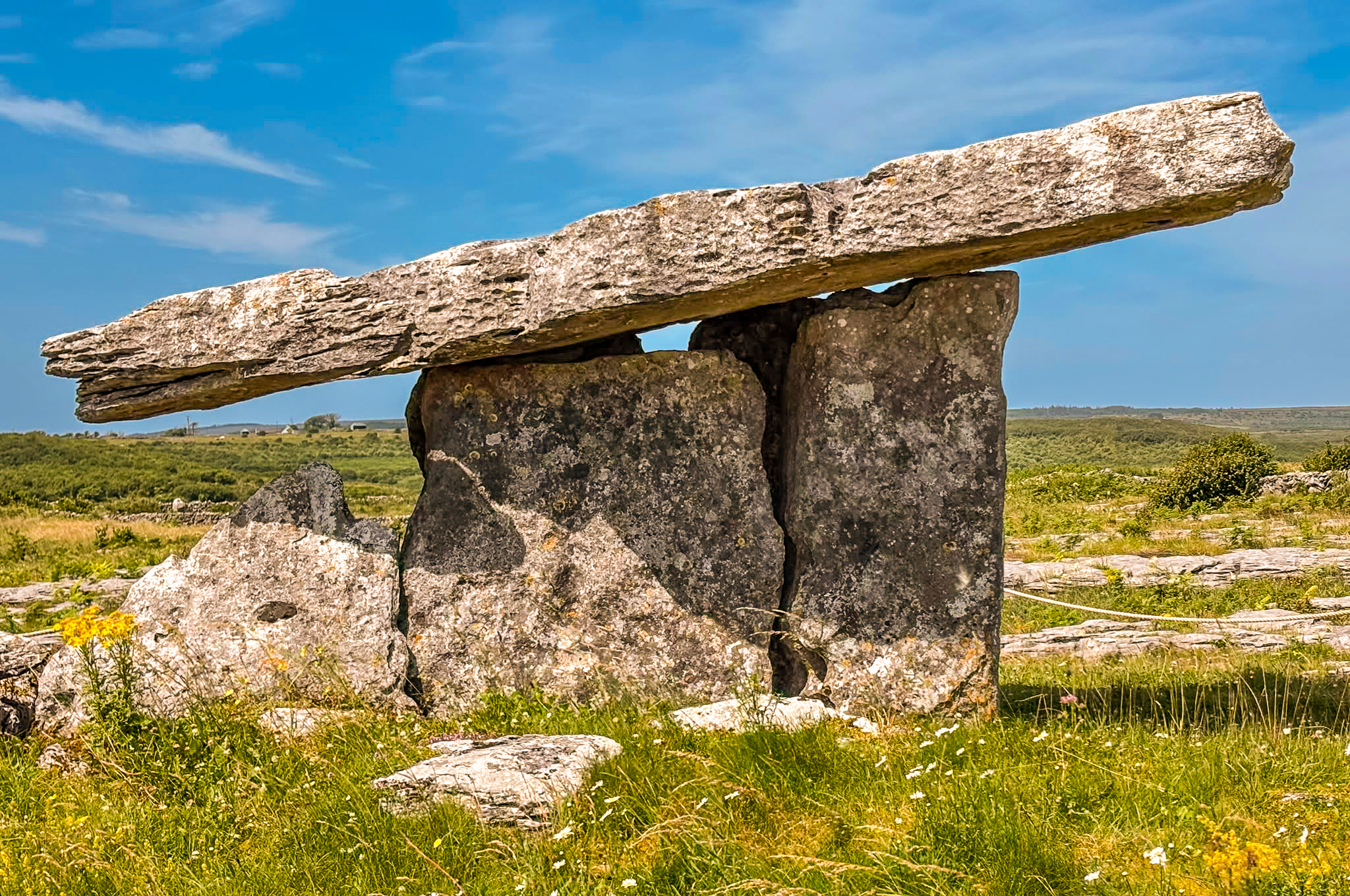
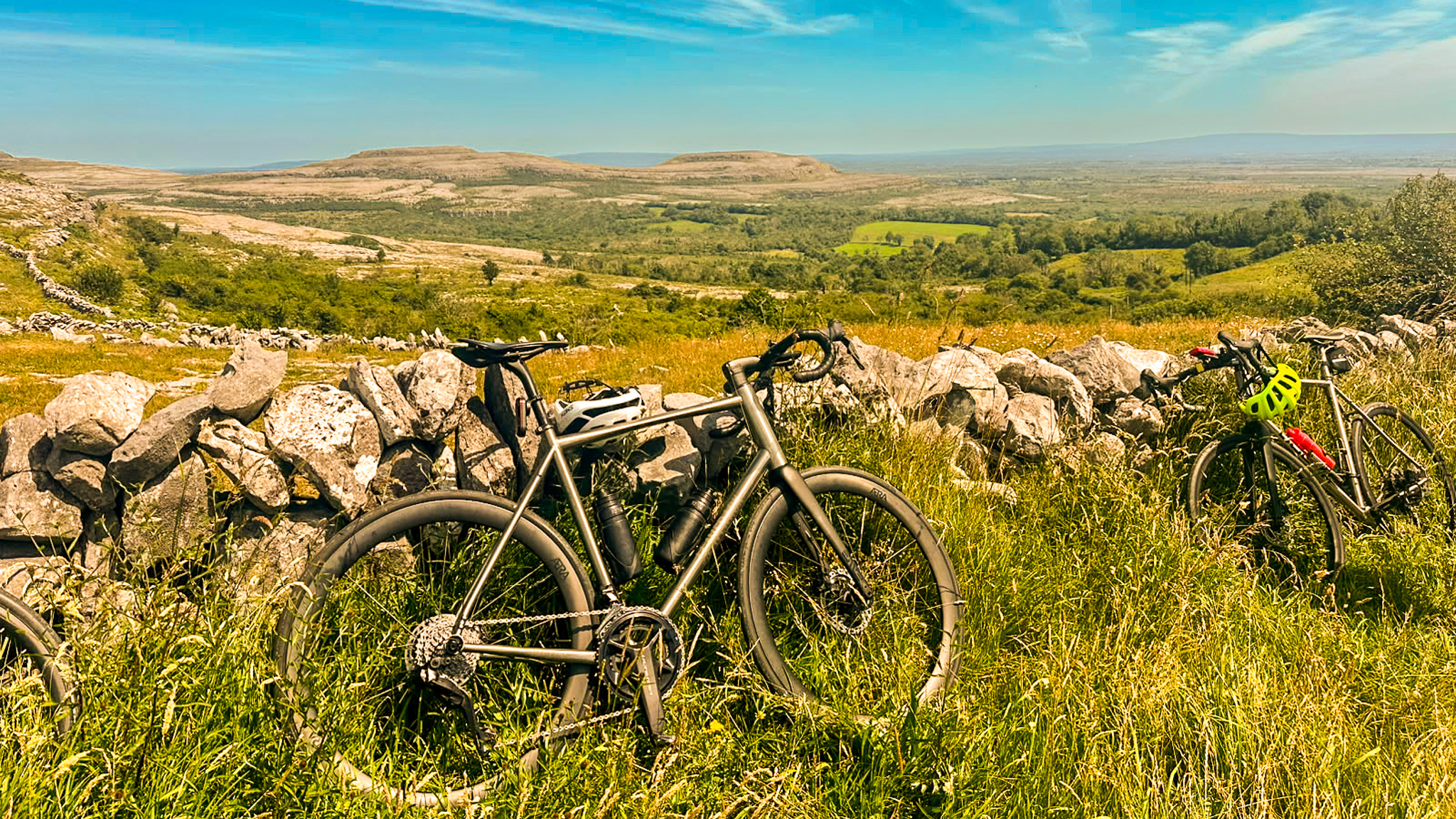
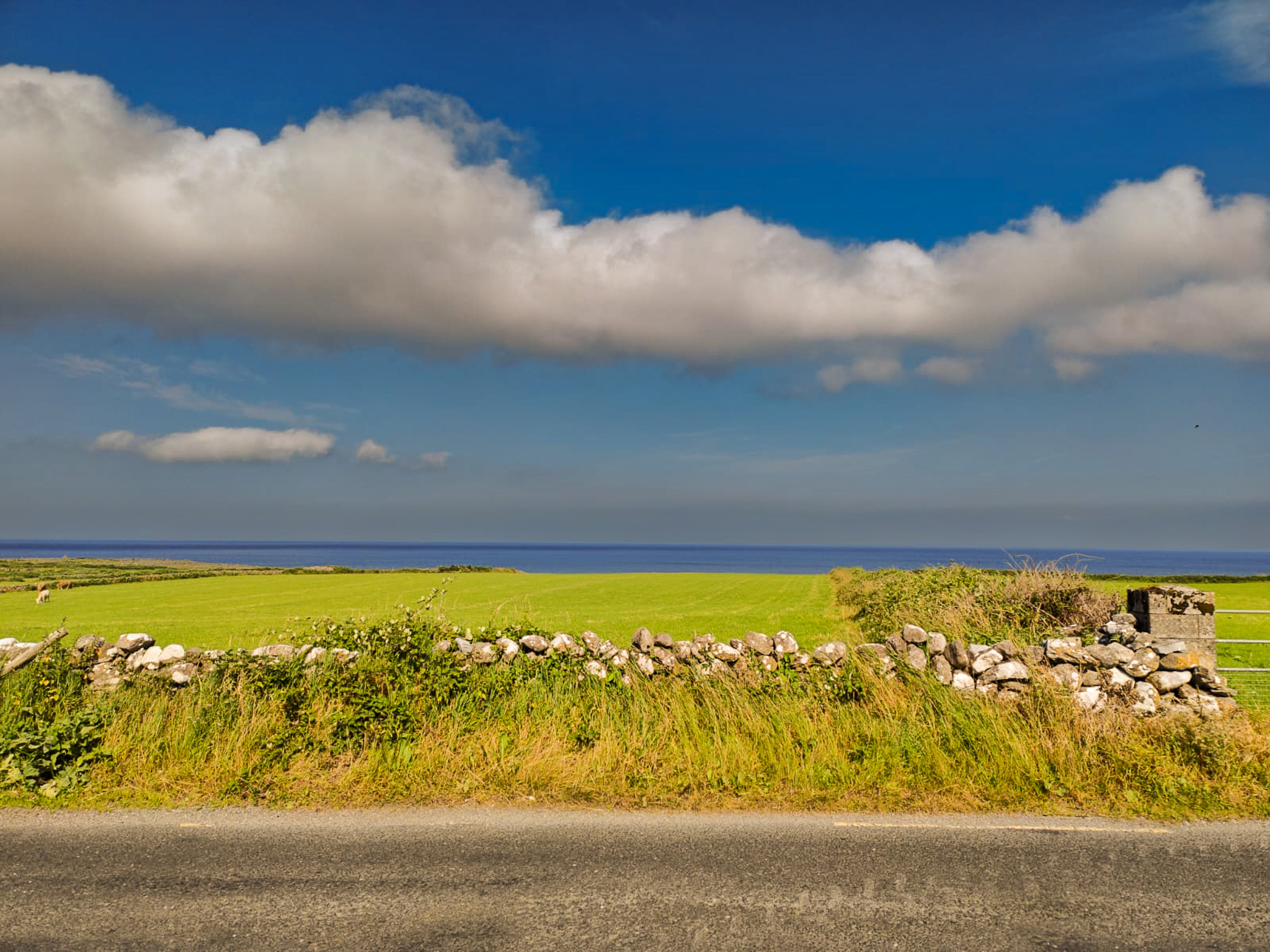
At Black Head we turn east and head into the Burren. The riding becomes more undulating as we cross the limestone karst plateau, with the scenery changing from open Atlantic coastline to an extraordinary lunar landscape of exposed rock, small fields and ancient stone walls. We’ll have time to stop at Poulnabrone Dolmen before continuing across the Burren towards Galway Bay.
The final section takes us through Kinvara and along the shores of Galway Bay before we arrive in Galway itself. After a day of big landscapes and open roads, the atmosphere changes completely: park the bikes, head into the city and enjoy an evening of good food, traditional music and Galway’s famously lively streets.
Highlights / sightseeing:
- Cliffs of Moher – Take a wander to the cliff-top and look out for the huge seabird colonies. The cliffs reach 214m at their highest point, while the Atlantic below is a popular spot for big-wave surfers.
- Doolin – A small characterful village with a big reputation for traditional Irish music.
- Poulnabrone Dolmen – One of Ireland’s best-known Neolithic monuments, dating back around 5,000 years. It’s a remarkably simple structure, but its isolated position makes it particularly atmospheric amidst the lunar karst landscape of the Burren.
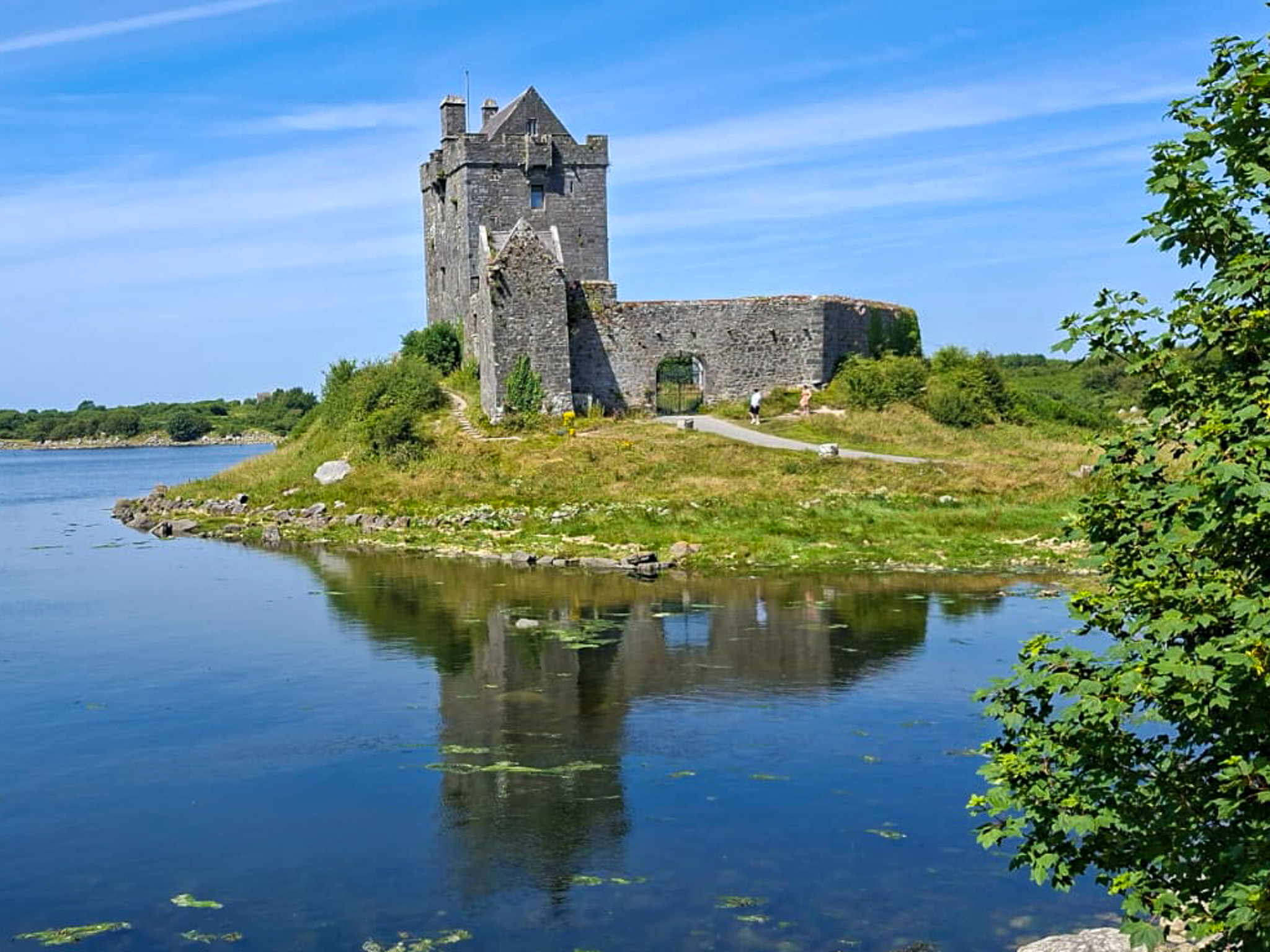
- Dunguaire Castle & Galway – Dunguaire is a picturesque 16th-century tower house on the shores of Galway Bay near Kinvara. In Galway, explore the Latin Quarter and Spanish Arch, browse the independent shops or find a traditional pub with live music before dinner.
Galway to Clifden
Approx. 101km / 63 miles & 488m / 1,600 feet ascent
 We enjoy a slightly lazier start this morning, allowing the commuter traffic around Galway to ease before heading west along the coast. Outside rush hour, this is a lovely stretch of road, with Galway Bay opening out beside us as we leave the city behind. We’ll make a short detour down to Spiddal to see the beach and enjoy the views across the bay. Those keen to explore further can also ride out to Coral Beach at Carraroe. This isn’t included in the mileage above, but adds around 6 miles and is well worth the extra effort. The beach is made largely from tiny pieces of maërl, a type of calcareous seaweed, giving it an unusual pale, almost tropical appearance and remarkably clear water.
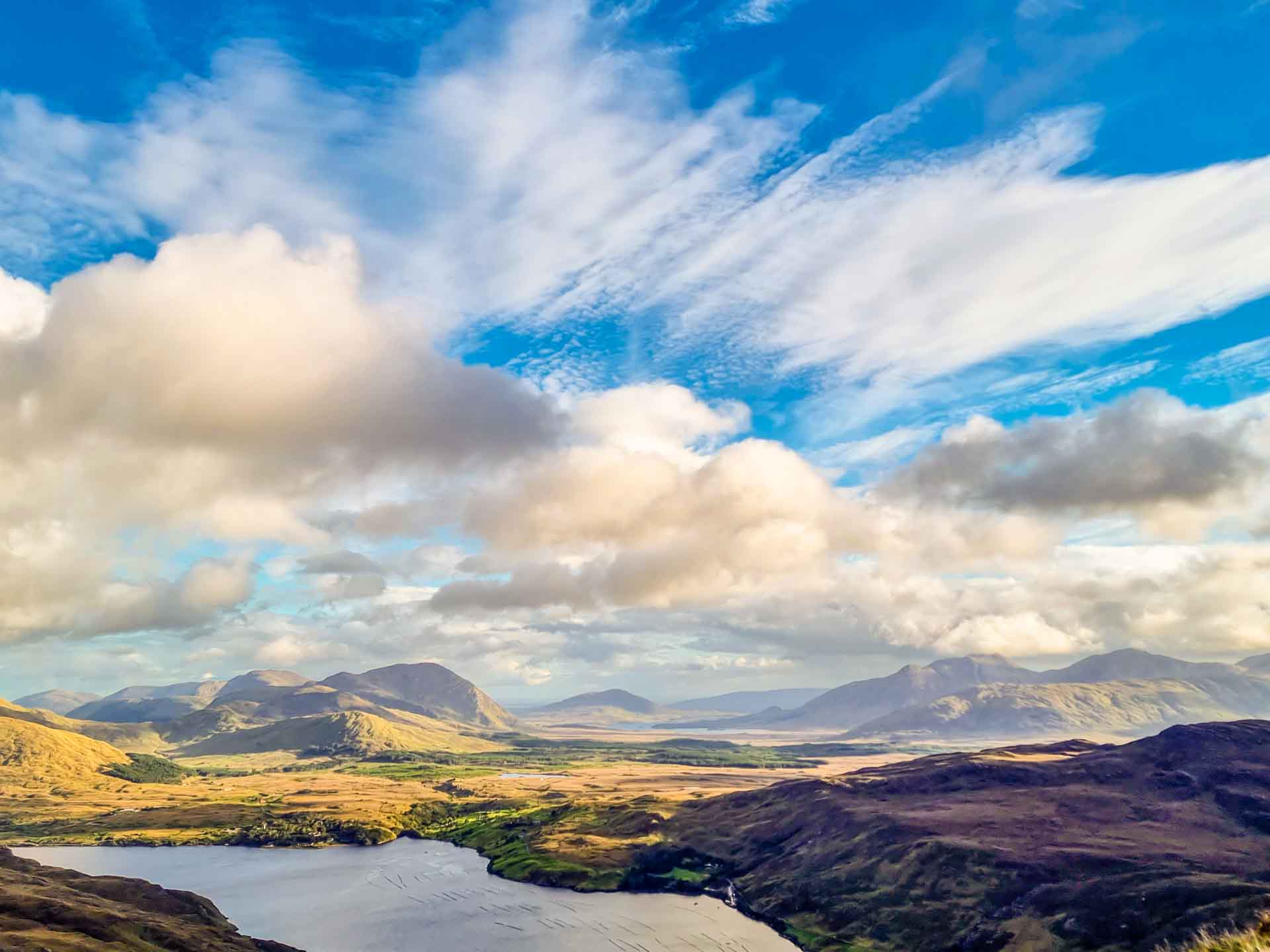
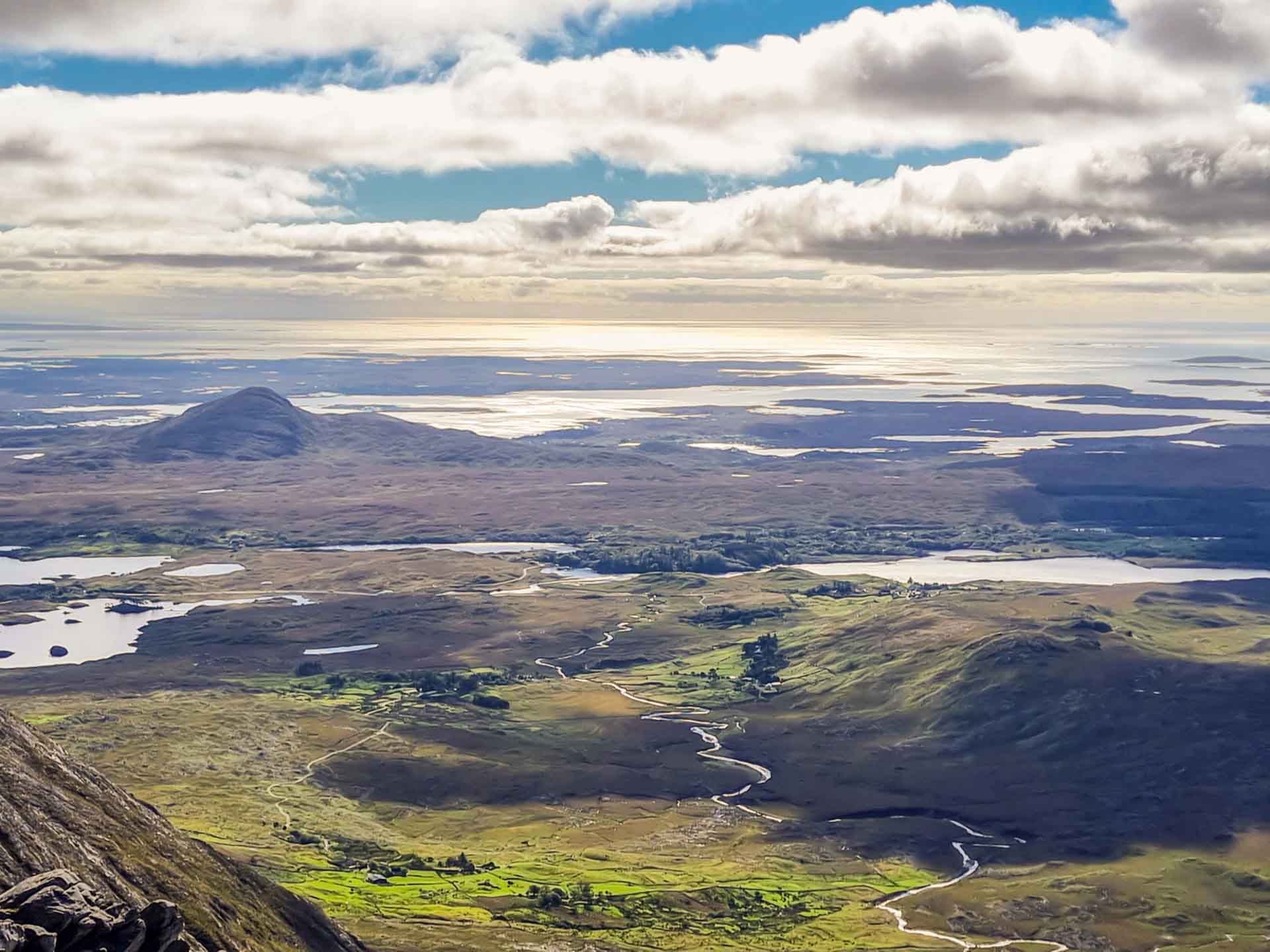
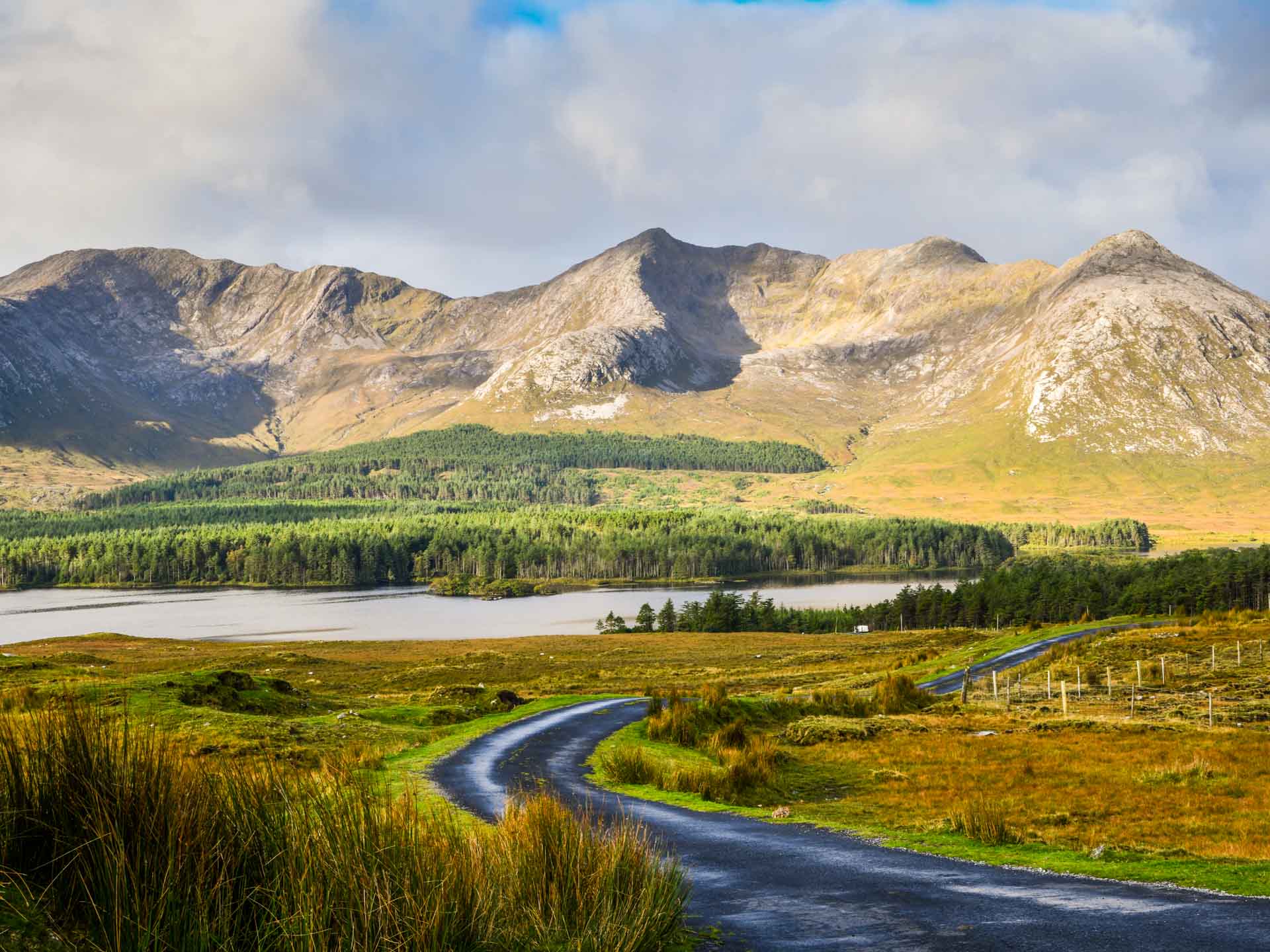
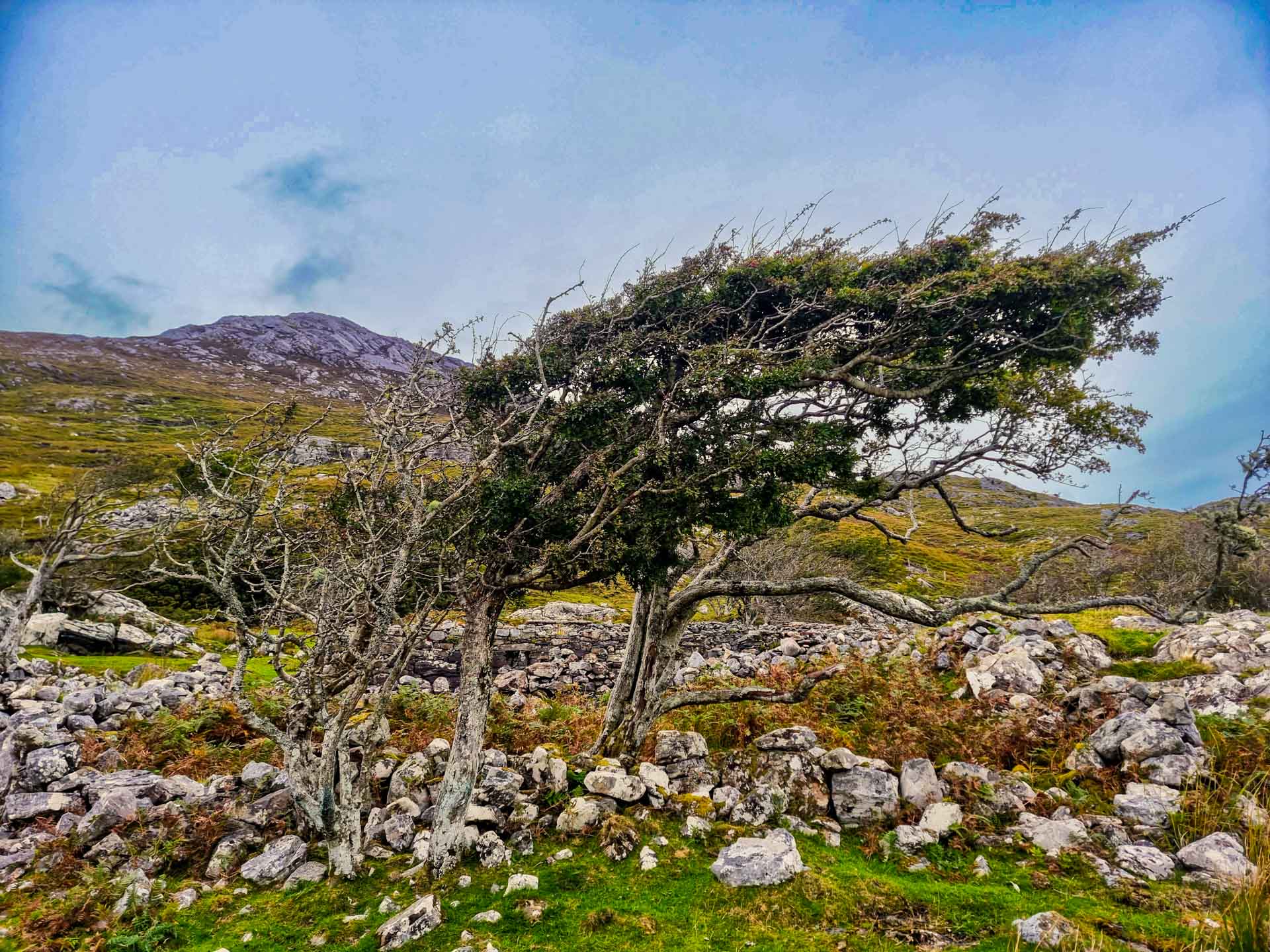
Back on the main route, we continue west with the Atlantic on one side and the Connemara mountains rising ahead. The further we go, the wilder the landscape becomes, with open roads, rocky hillsides and scattered settlements. Later, we turn inland onto the Bog Road towards Clifden, crossing wide stretches of open bog with the Twelve Bens (the Connemara Mountains) on the horizon. You haven’t really been to Ireland until you’ve seen a proper bog! We finish in Clifden, the lively little capital of Connemara.
Highlights / sightseeing en route:
- Spiddal – A great place to get a feel for the Irish-speaking Gaeltacht. The village is also home to the Spiddal Craft & Design Studios, where you can see local artists and craftspeople at work.
- Coral Beach, Carraroe – An optional detour to one of the most unusual beaches in the area. Its ‘coral’ is actually maërl, a slow-growing marine algae that forms the tiny white fragments covering the shore.
- Connemara bogs – Look out for the pools, heather and distinctive cutaway sections of peat as you cross the Bog Road. Peat has been harvested here for generations, and turf cutting is still part of rural life in the region.
- Clifden – colourful buildings, independent shops, cafés and pubs provide plenty to explore after the ride.
Clifden to Westport
Approx. 92km / 57 miles & 861m / 2,825 feet ascent
 Another stunning day begins with a loop around the Sky Road, one of Ireland’s most scenic coastal routes. Those who want to conserve their legs can skip this section and rejoin the group a couple of miles north of Clifden, while everyone else gets an early dose of spectacular Atlantic views. From here, we head through the Connemara Gaeltacht, with the mountains rising to our south as we make our way towards Killary Harbour. We follow the southern shore of the lough, then loop around its eastern end and back again, with Mweelrea mountain providing a dramatic backdrop.
There’s also an optional short, unpaved detour to Aasleagh Falls at the head of the lough. We also make a short detour into the Doolough Valley, where we’ll stop for lunch on the lough shore. From here, we turn back and take the road over Sheeffry Pass, a quieter and much more remote crossing through the mountains than the road north. Our route takes a loop out to Westport harbour and its viewpoint before we end the day in Westport town.
Highlights / sightseeing en route:
- Letterfrack – If you have time to explore, there’s plenty here beyond the cycling. The Connemara National Park visitor centre and a local woodworking craft centre are both in the village, while Kylemore Abbey and its gardens are just a little further on.
- Killary Harbour & Aasleagh Falls – Killary is generally regarded as Ireland’s only true fjord. The optional detour to Aasleagh Falls is only a short distance but includes an unpaved section, so it’s best treated as a weather-dependent extra.
- Doolough – The valley’s spectacular scenery has a poignant history. During the Great Famine in 1849, starving people were required to walk from Louisburgh to Delphi to be assessed for continued outdoor relief. At least seven people died on the journey, with some accounts suggesting the number was considerably higher.
- Westport – A planned Georgian town centred around a handsome tree-lined mall and the Carrowbeg River. Its colourful shopfronts, traditional pubs and lively food scene make it particularly good for an evening wander.
Westport to Sligo
Approx. 113 km / 70 miles & 800m / 2,625 feet ascent
 Today is one of our longer days, taking us from County Mayo into Sligo through a changing mix of small towns, open countryside and lakeside roads. It’s less dramatic than some of the days around it, but there’s plenty of variety and a good opportunity to settle into the rhythm of a longer-distance ride, and a couple of fascinating cultural stops add real interest.
We leave Westport and head east through Castlebar, a town with a surprisingly dramatic history. In 1798, French troops fighting alongside Irish rebels defeated the British here in what became known as the “Races of Castlebar” – supposedly because the British retreated rather rapidly - before turning north to Turlough. Here we’ll stop at the cafe of the National Museum of Irish Country Life, which tells the story of everyday rural life in Ireland over the last 150 years. It’s a good excuse to get off the bike for an hour and provides a fascinating glimpse into the Ireland we’re riding through.
Back on the bikes, we continue north towards Foxford and the road between Lough Cullin and Lough Conn. With the two lakes opening out on either side, this is the most scenic section of the day's riding, with open countryside and mountains providing a changing backdrop. We then head cross country towards Banada, where we’ll stop for lunch at the Peace Gardens before continuing towards Ballysadare and Sligo. The final miles bring the mountains back into view, with Knocknarea and the distinctive Sligo landscape signalling that we're nearly there.
Highlights / sightseeing en route:
- National Museum of Ireland – Country Life, Turlough – Housed in a striking modern building overlooking Turlough Park, the museum explores rural Irish life through displays of farming equipment, crafts, clothing and domestic life.
- Lough Cullin & Lough Conn – The two lakes are joined by the narrow channel at Pontoon and are known for their fishing and birdlife. The changing views across the water make this a particularly pleasant section of the ride.
- Banada Peace Gardens – Created as a place of peace and reconciliation, the gardens provide a quiet and unusual lunch stop and a chance to stretch the legs before the final part of the ride.
- Sligo – a characterful town, associated with the poet WB Yeats, with plenty of good pubs, cafés and restaurants for the evening.
Sligo to Donegal
Approx. 53 miles / 84km & 2,350 feet / 700m ascent
 The view that dominates the start of today's ride is one of the most recognisable in Ireland. Riding north from Sligo, we quite literally ride ‘Under Ben Bulben’, the title of one of W.B. Yeats’ best-known poems. The great flat-topped mountain rises dramatically beside us, its distinctive shape the result of layers of ancient limestone and mudstone formed when this landscape lay beneath a tropical sea more than 300 million years ago. After around six miles, we stop at Drumcliffe to visit Yeats’ grave.
When we start to leave the hulk of Benbulben behind, we head west towards the coast, making a loop around the Mullaghmore peninsula. With the Atlantic on one side and the mountains behind, this is a beautiful little stretch of riding, with the turreted Classiebawn Castle adding a touch of fairy-tale drama to the landscape. We then head north into Donegal, passing through Bundoran, one of Ireland’s best-known surfing towns, before continuing towards Ballyshannon and the long sweep of Rossnowlagh Beach before the final ride into Donegal town.
Highlights / sightseeing en route:
- Drumcliffe – Yeats’ grave sits in the churchyard of a much older site, founded by St Columba in 574 AD. There’s also a ruined round tower and an ancient high cross, making this much more than simply a literary pilgrimage.
- Mullaghmore & the Spanish Armada – The headland is overlooked by Classiebawn Castle and is famous among big-wave surfers, with winter waves reaching extraordinary heights. The nearby coast also has a connection with the 1588 Spanish Armada: three ships were wrecked at Streedagh, with more than 1,100 lives lost.
- Rossnowlagh Beach – A huge, west-facing Blue Flag beach and one of Ireland’s best-known surfing spots. The beach is famous for its long rolling waves, while the wide sweep of sand makes it worth visiting even if you're not getting in the water.
- Donegal Town – Dominated by the impressive ruins of Donegal Castle, the town was once the stronghold of the powerful O’Donnell dynasty, who ruled much of Ulster before the Flight of the Earls in 1607.
Donegal to Buncrana
Approx. 108km / 67 miles & 1,173m / 3,850 feet ascent (plus 3.5 miles in ferry)
 A real taste of the wild north west of Ireland, with a lovely progression from the open countryside around Donegal into the remote mountains and lakes of Donegal’s interior. We head west and north towards Glenties, riding through quiet countryside and small rural communities before the landscape begins to open out.
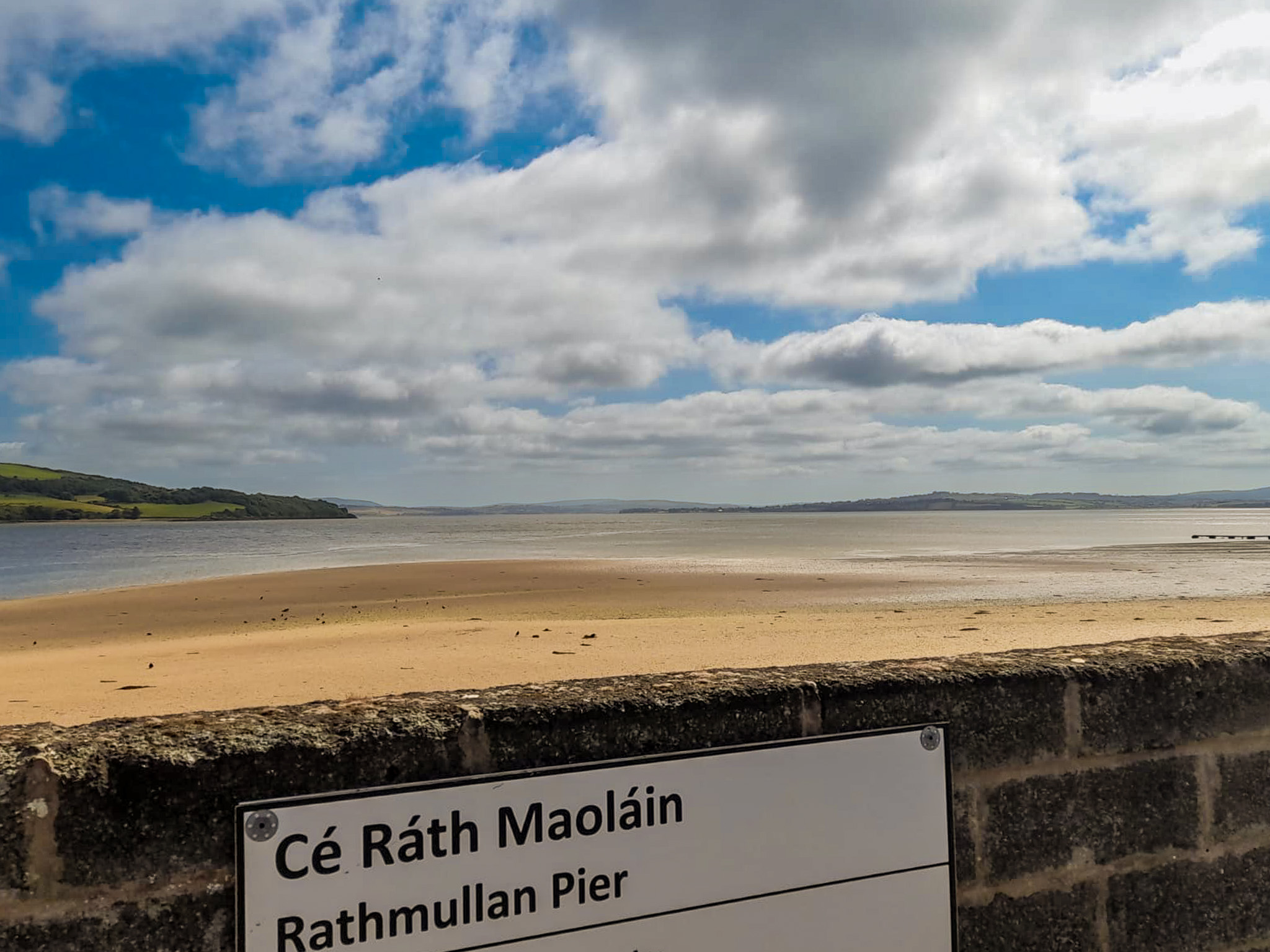
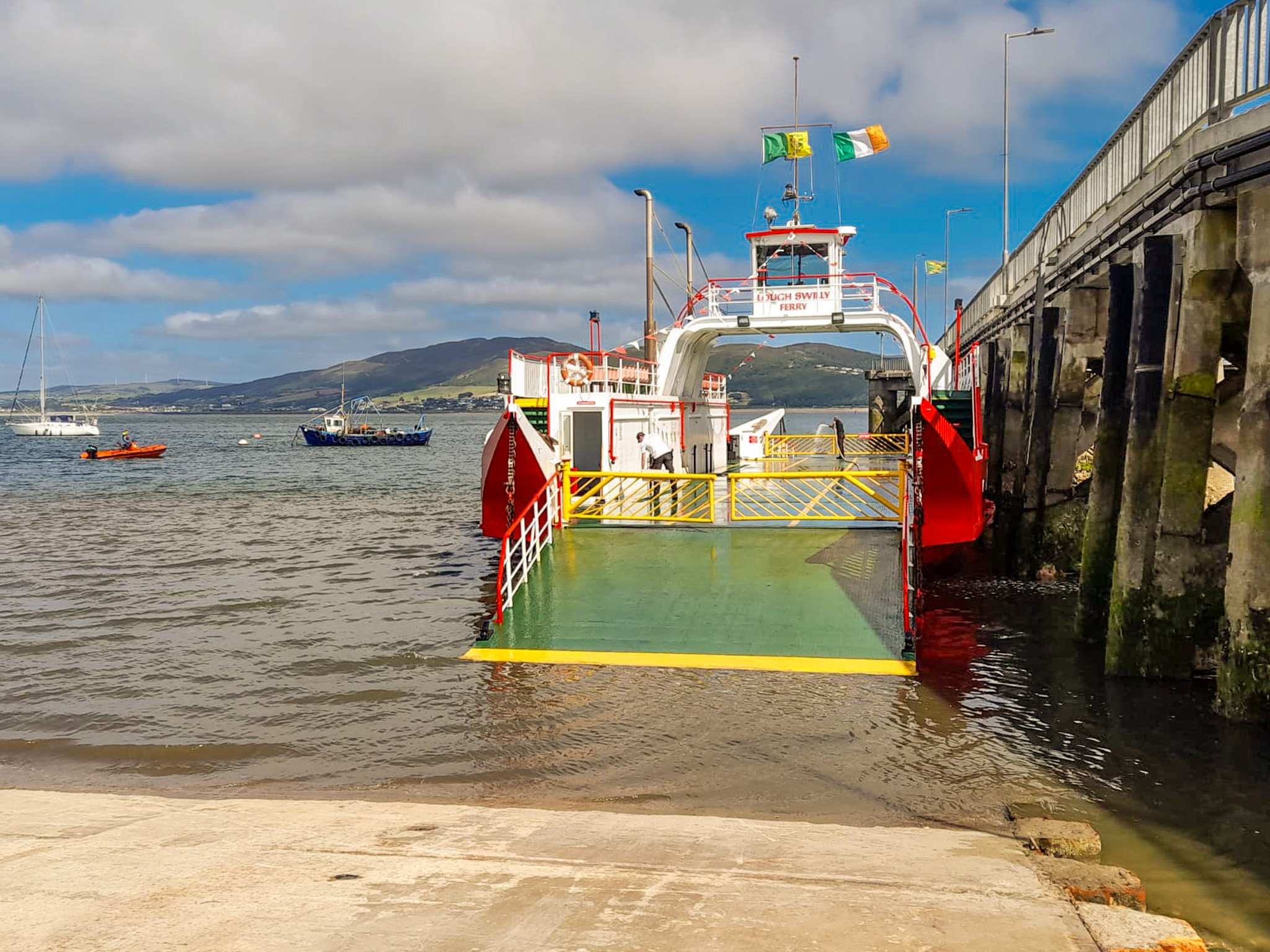
From Glenties, the route becomes increasingly wild as we make our way towards Glenveagh National Park and into the Derryveagh Mountains. The Bog Road takes us across heather-covered hills and open moorland, with big views in every direction and very little sign of civilisation. We then descend towards the shores of Lough Swilly and continue to Rathmullan, where there are a few pubs if you arrive ahead of the group and fancy a well-earned drink. From here, we catch the ferry across the lough to Buncrana, making for a rather satisfying end to a day that has taken us deep into the Donegal countryside.
Highlights / sightseeing en route:
- Glenties – A characterful little town at the meeting point of two glens, with a strong tradition of music and storytelling. It has also won Ireland’s Tidy Towns competition several times.
- Lough Finn – A beautiful freshwater lake whose name comes from local mythology. According to legend, Finngeal drowned here while trying to save her wounded brother Feargamhain.
- Glenveagh National Park – Covering more than 16,000 hectares, this is one of Ireland’s largest national parks, protecting mountains, lakes, woodland and extensive blanket bog. Red deer and birds of prey are among the wildlife you might spot.
- Rathmullan–Buncrana ferry – The crossing of Lough Swilly is a fitting finale to the day. The lough is one of Ireland’s great natural harbours and has a long and fascinating maritime history.
Buncrana to Malin Head
Approx. 61km / 38 miles & 2,650 feet / 808m ascent
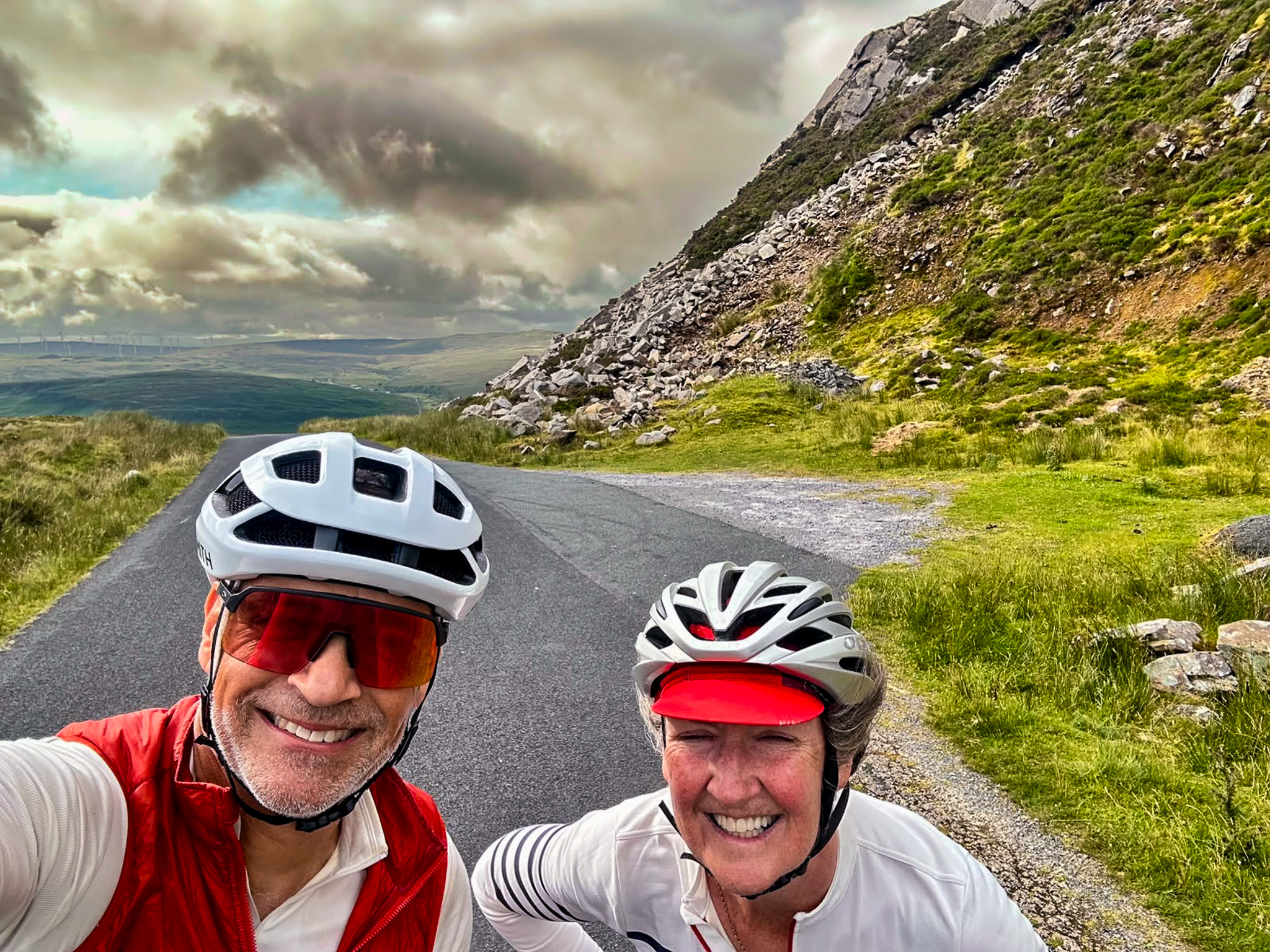
 Our final day is a proper lap of honour, taking us to the northernmost point of mainland Ireland. It’s a shorter day to allow time for the transfer to Belfast, but there’s still plenty of scenery to enjoy before we say goodbye to the Wild Atlantic Way. We head north along the coast from Buncrana, with an optional detour to Dunree Fort before tackling the mighty Mamore Gap! It's a real sting in the tail, as the road climbs in a direct line to one of the highest points on the Inishowen Peninsula, with huge views across the Atlantic and surrounding coastline - an easier alternative is available for those with nothing to prove!
From here, we descend towards Tullagh Strand before turning east and then north again on increasingly remote roads towards Malin Head. The landscape becomes wilder as we approach the exposed headland, with the Atlantic stretching away in every direction. Reaching Ireland’s most northerly point is a fitting finale – and definitely deserves a few celebratory photos. Afterwards, we load the bikes into the van and transfer to Belfast through the green rolling countryside of Northern Ireland.
After a week of mountains, bogs and Atlantic coastline, lively Belfast provides a very different setting for our final night together.
Highlights / sightseeing en route:
- Dunree Fort – A coastal military fort guarding the entrance to Lough Swilly, with defences dating back centuries.
- Mamore Gap – A dramatic mountain pass with spectacular views across Tullagh Bay and the Inishowen coastline.
- Malin Head – The most northerly point of mainland Ireland, with rugged cliffs, sea stacks and the distinctive Banba’s Crown at the tip of the peninsula.
- Belfast – A complete change of pace for the final night, with the Cathedral Quarter, Titanic Quarter and plenty of pubs and restaurants to explore.
Depart Belfast
You’re free to check out of the hotel and depart at your leisure. But if you have time, Belfast is well worth exploring for an extra day or two. It’s a fascinating city with a complicated history, impressive architecture, a lively food and music scene, and plenty to discover. Just let us know if you’d like us to extend your hotel booking so you can stay a little longer.
Highlights / sightseeing:
- Titanic Belfast – An award-winning museum on the site where the Titanic was built, telling the story of the ship from its construction in Belfast to its ill-fated maiden voyage.
- Cathedral Quarter – The heart of Belfast’s nightlife, with cobbled streets, colourful street art, independent restaurants and some of the city’s best traditional pubs.
- Belfast’s political murals – Take a Black Cab tour or explore the Falls and Shankill areas to see the famous murals and learn more about the city’s recent history.
- St George’s Market – One of Belfast’s oldest attractions, with food stalls, local produce, crafts and live music under its magnificent Victorian roof.
Jennifer Davies
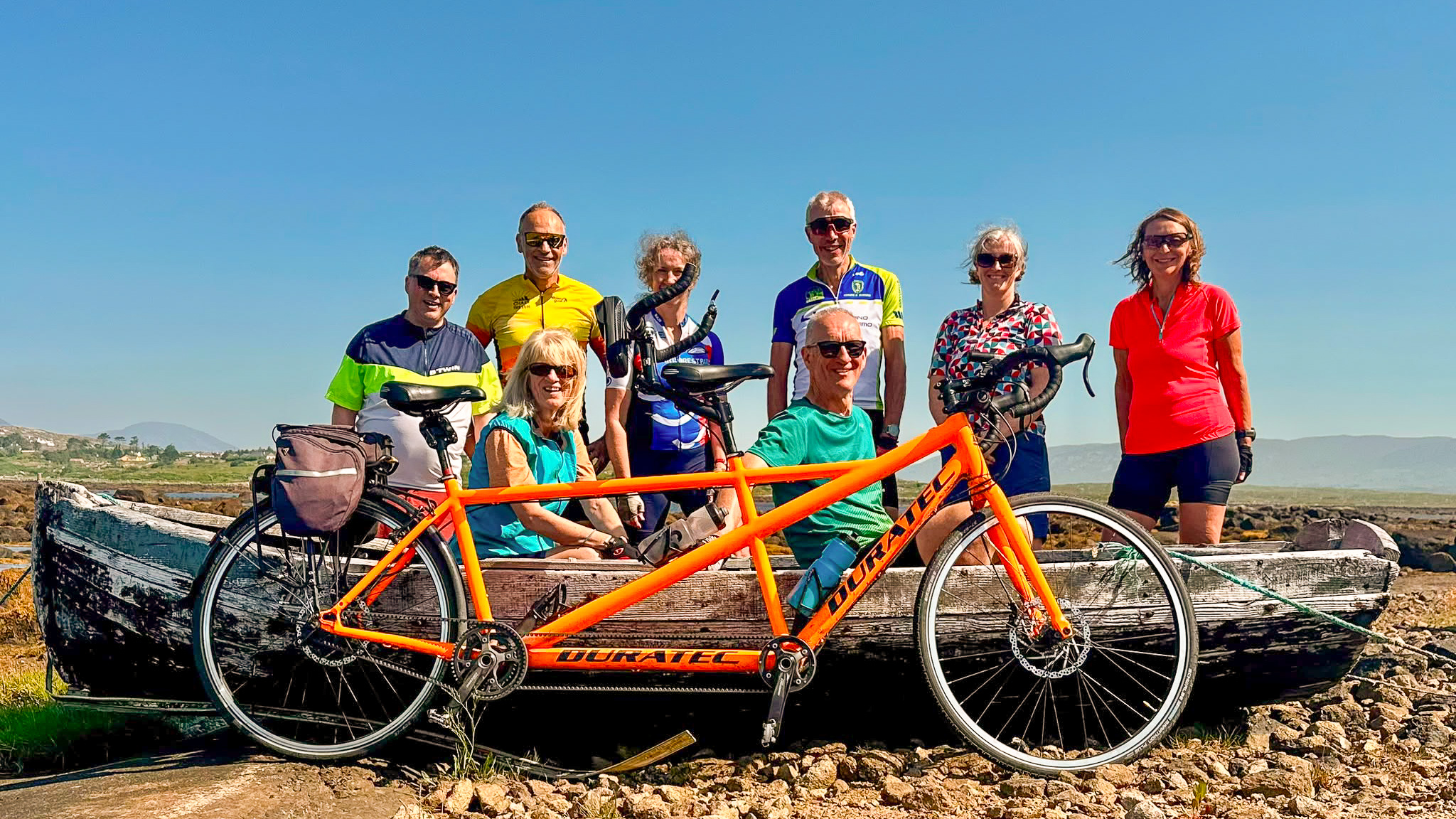
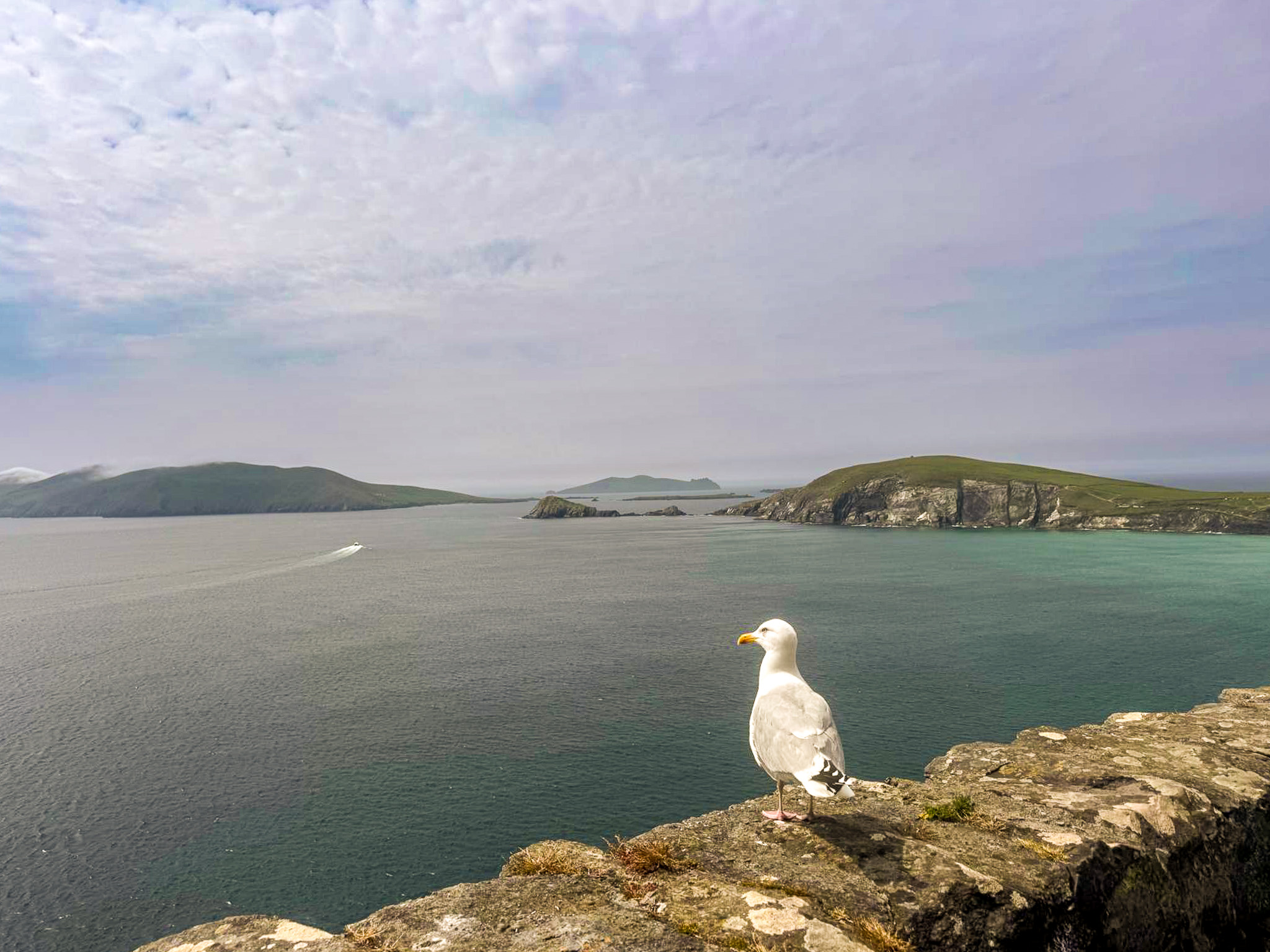
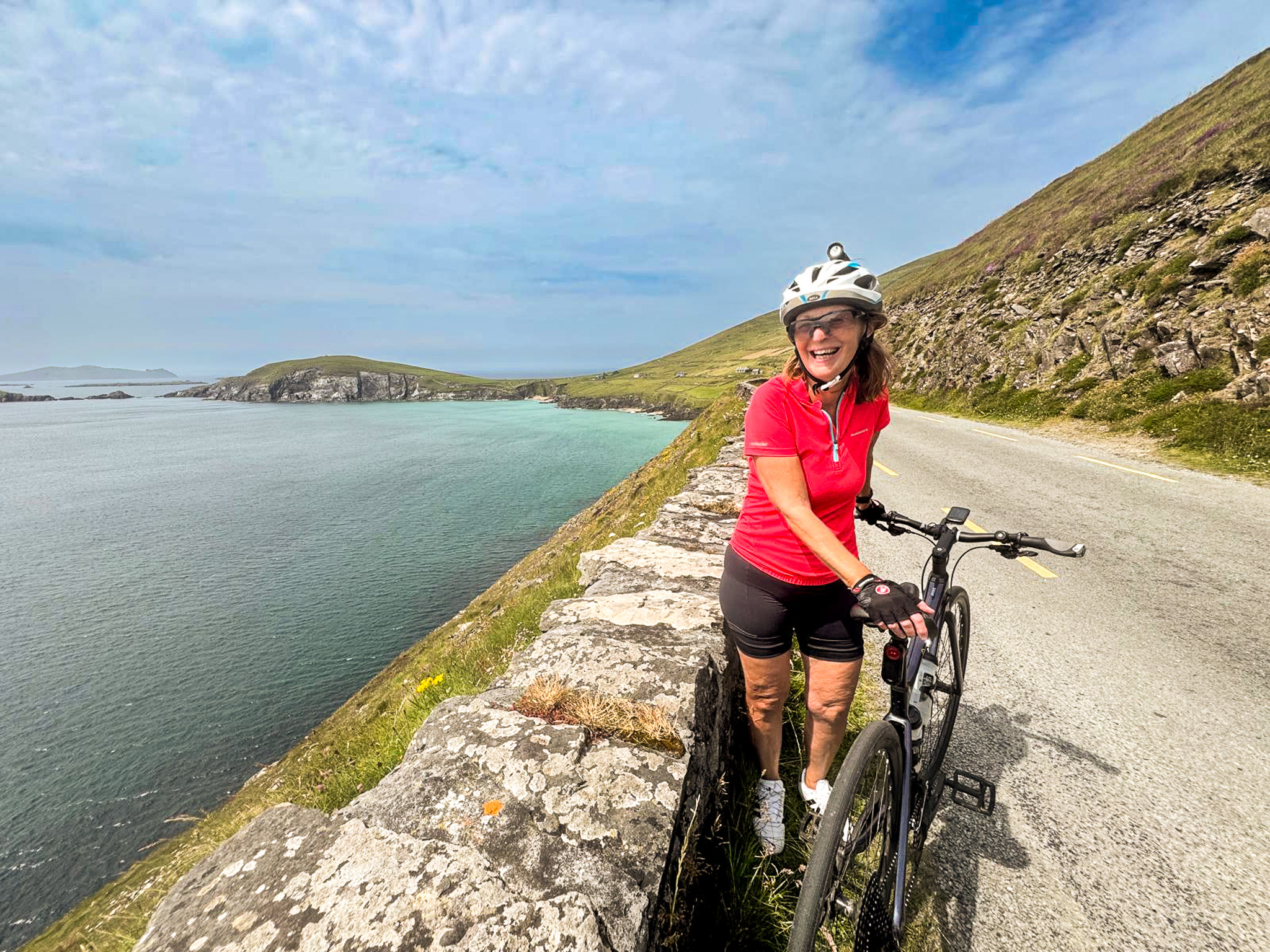
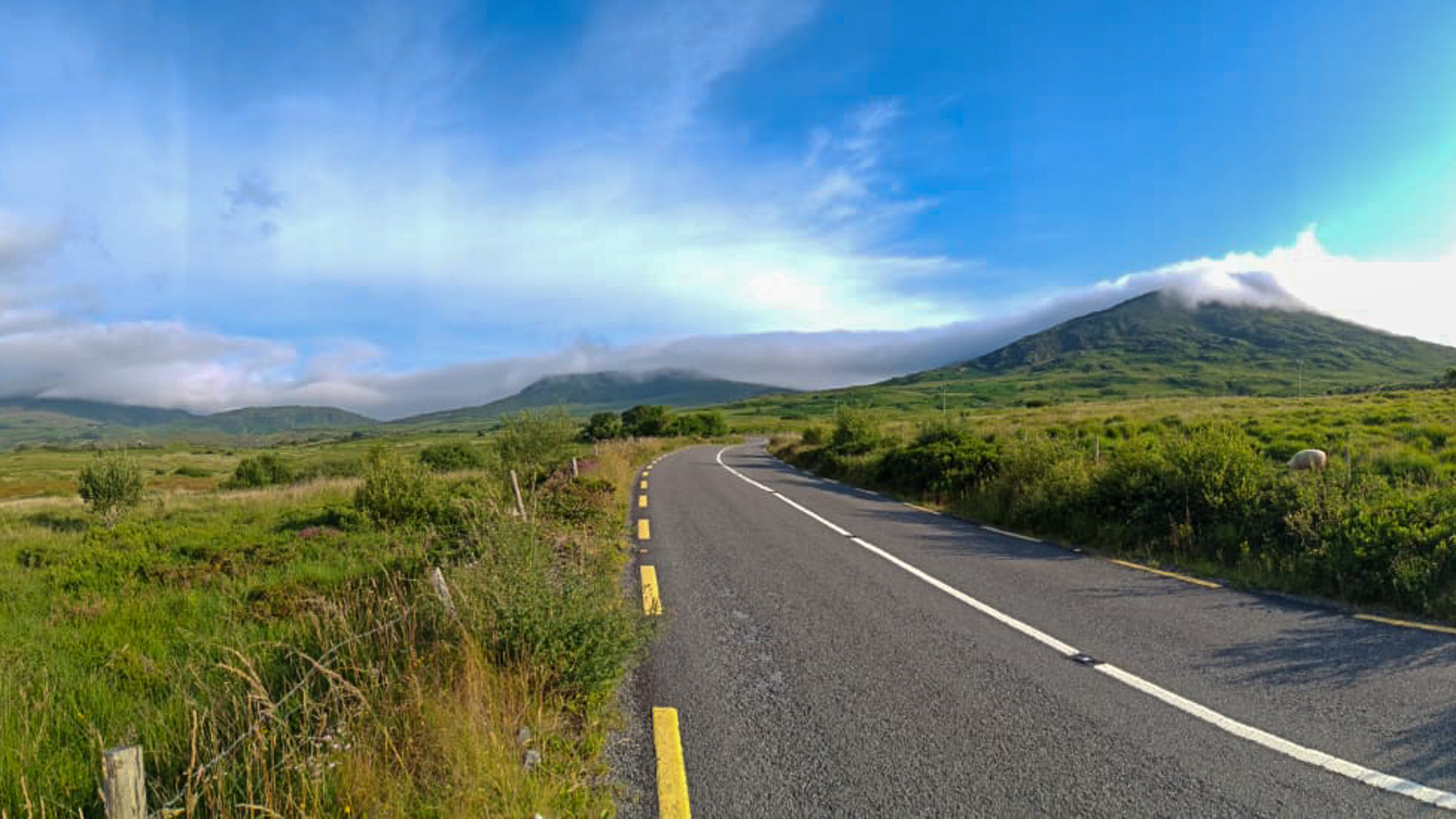
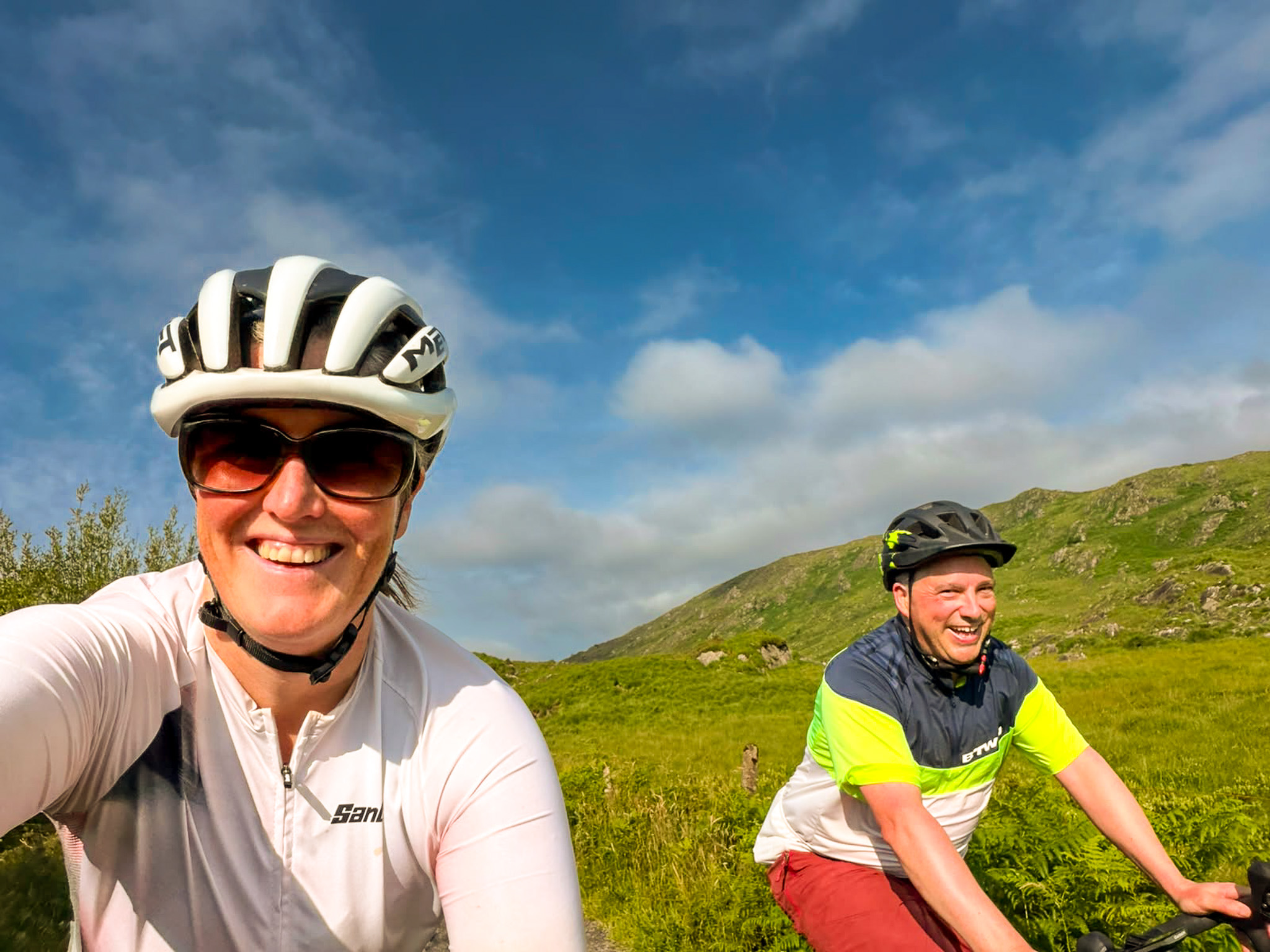
I thoroughly enjoyed this trip. I had expected it to be good, but the reality far exceeded my expectations. It was extremely well organised, the routes took us through stunning scenery, the guides, Anne and Lesley, were knowledgeable and supportive throughout the trip and the lunch and break stops had all been carefully thought out.